Why Growing Startups Are Ditching Spreadsheets for Smart HR Software
HR software for startups has become the secret weapon for founders who want to scale without drowning in paperwork. Instead of juggling spreadsheets and making repeated trips to the bank to pay salaries manually, today’s smart entrepreneurs are automating their people operations from day one.
Quick Answer: Best HR Software Categories for Startups
– All-in-One HRIS: Complete employee database with payroll integration
– Payroll-First Suites: Automated tax filing and compliance alerts
– Global Workforce Tools: Hire contractors and employees in 150+ countries
– Budget-Friendly Options: Free tiers starting at $2-8 per employee
– Culture Platforms: Employee engagement and performance tracking
Managing human resources at a startup isn’t just about payroll and hiring—it’s about building a strong foundation for growth. As one entrepreneur noted, “An entrepreneur wears many hats: CEO, CFO, Business Development Manager, Head of Human Resources, and everything else in between.”
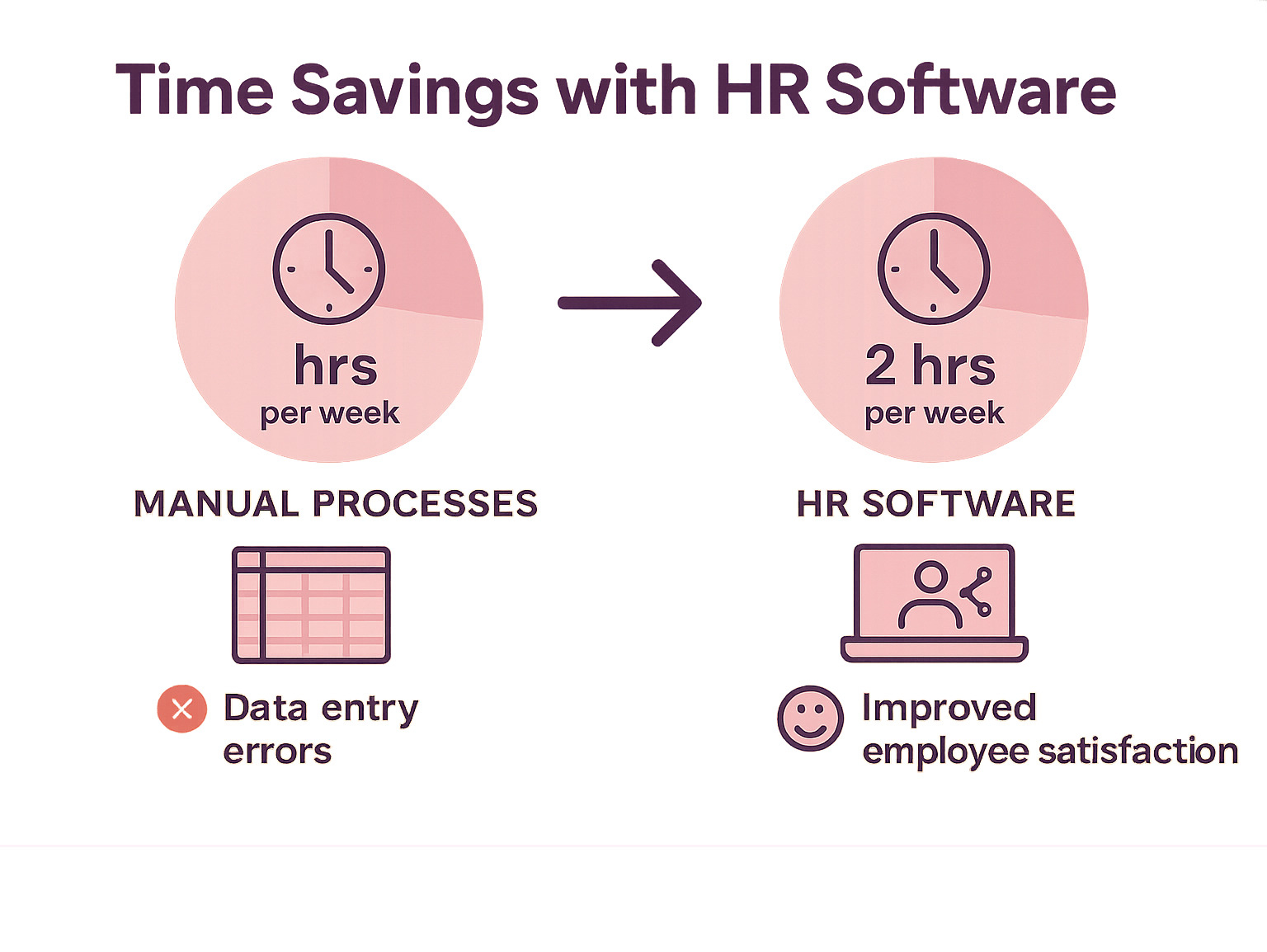
The statistics tell the story: 60% of working hours can be saved by automating administrative tasks with modern HR software. Meanwhile, companies using structured HR processes see dramatic improvements—one user saved 20 hours weekly and $20,000 annually after switching from manual payroll to an integrated system.
The reality is simple: What starts as a manageable five-person team quickly becomes an operational nightmare at 15-30 employees without proper systems. Manual processes that seemed fine at launch suddenly create compliance risks, payroll errors, and frustrated team members who can’t even request time off efficiently.
Smart startups are getting ahead of this curve by implementing HR software early, when it’s still easy to establish good habits and clean data practices.
Why Every Startup Needs HR Software
The days of managing your team with spreadsheets and gut feelings are over. Modern startups face unique challenges that manual HR processes simply can’t handle effectively. Let’s break down why HR software for startups has moved from “nice-to-have” to “business-critical.”
Efficiency gains are immediate and measurable. When you automate time-consuming administrative tasks, your team can focus on what actually drives growth. One startup founder shared how payroll used to take a full day per month—now it takes less than an hour. That’s not just time saved; it’s sanity preserved and strategic focus maintained.
Compliance becomes manageable, not terrifying. Growing startups often lack dedicated HR staff to interpret complex labor laws. Modern HR platforms automatically track compliance requirements, generate required reports, and alert you to potential issues before they become expensive problems. Research shows that replacing an employee can cost anywhere from 16% to 213% of their annual salary, making compliance crucial from the start.
Employee experience improves dramatically. Your team expects the same user-friendly experience they get from consumer apps. When employees can request time off, view pay stubs, and update personal information through a mobile app, they’re happier and more productive. This isn’t just about convenience—it’s about showing your team that you value their time and experience.
Risk reduction becomes systematic. Manual processes are error-prone. Whether it’s miscalculating payroll taxes or losing important employee documents, human error in HR can be costly. Automated systems with built-in checks and audit trails protect your business from these risks.
For more insights on scaling your startup effectively, check out our comprehensive guide on Startup Growth Strategies.
When to adopt HR software for startups
The question isn’t whether you need HR software—it’s when to implement it. Based on our research and industry best practices, here are the key triggers:
The 15-employee threshold is when most startups hit their first major HR complexity wall. This is where manual processes start breaking down, compliance requirements multiply, and founders realize they’re spending more time on HR than on building their product.
Seed to Series A funding rounds often coincide with rapid hiring phases. If you’re planning to double or triple your team size within 12 months, implementing HR software before the growth spurt will save you countless headaches later.
Remote-first operations demand digital HR from day one. If your team is distributed across multiple states or countries, manual processes become impossible to scale. Global payroll, compliance across jurisdictions, and coordinating benefits for remote workers require automated systems.
How HR software helps scale and manage growth
Scaling a startup is like trying to change the tires on a moving car—everything needs to keep working while you’re building new capabilities. HR software for startups provides the infrastructure that makes this possible.
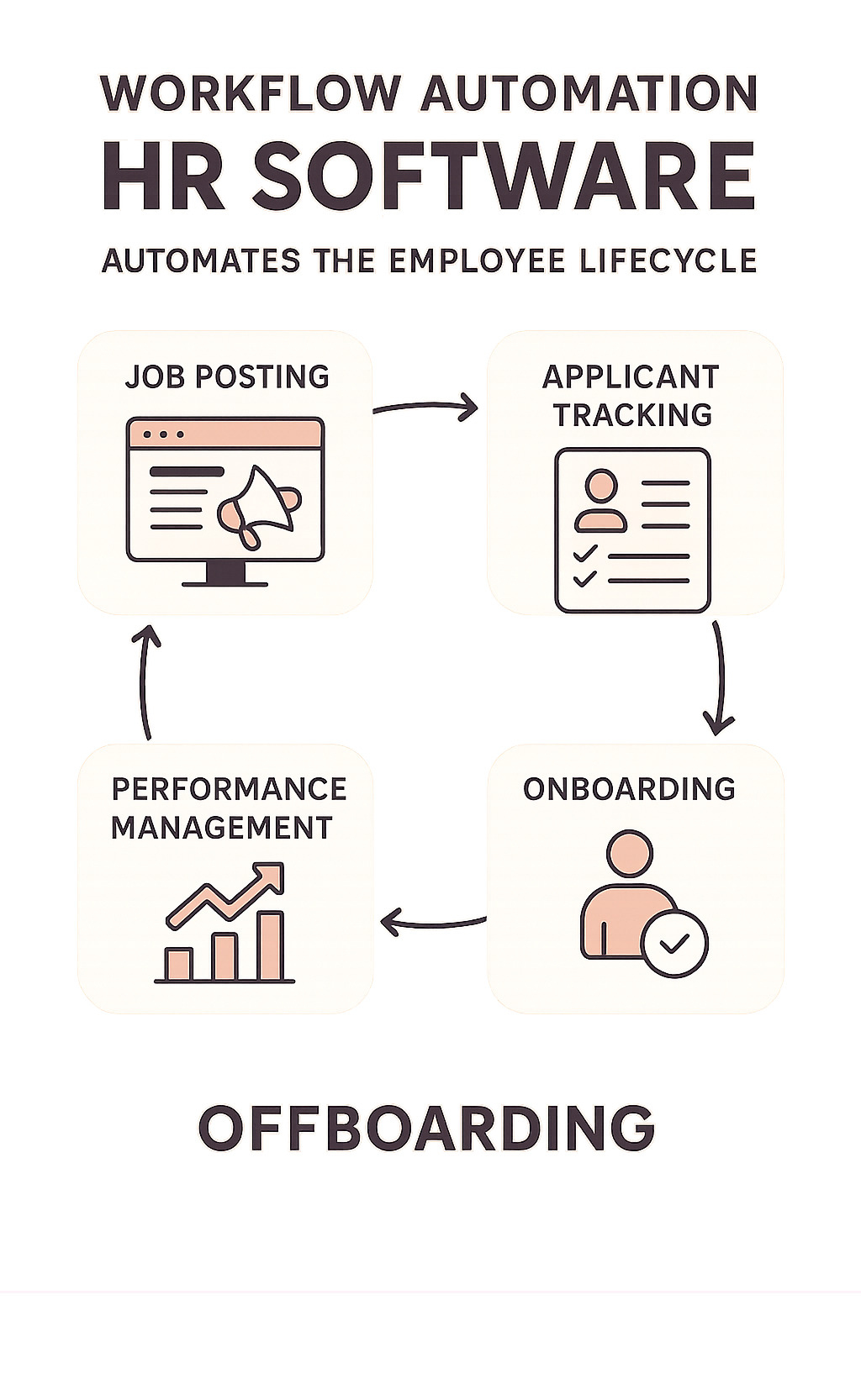
Workflow automation eliminates bottlenecks that could slow your growth. Instead of founders manually approving every time-off request or processing payroll by hand, automated workflows handle routine tasks while flagging exceptions that need human attention.
Real-time dashboards give you visibility into your most important asset—your people. You can track hiring progress, monitor employee satisfaction, identify flight risks, and make data-driven decisions about compensation and benefits.
Self-service portals empower your team to handle routine tasks independently. When employees can update their own information, request time off, and access their documents without involving HR, you eliminate administrative overhead and improve response times.
The result? You can focus on what matters most: building your product, serving customers, and growing your business.
Must-Have Features in HR Software for Startups
Not all HR software is created equal, especially when it comes to startup needs. We’ve analyzed hundreds of platforms to identify the features that actually matter for growing companies. Here’s what to prioritize:
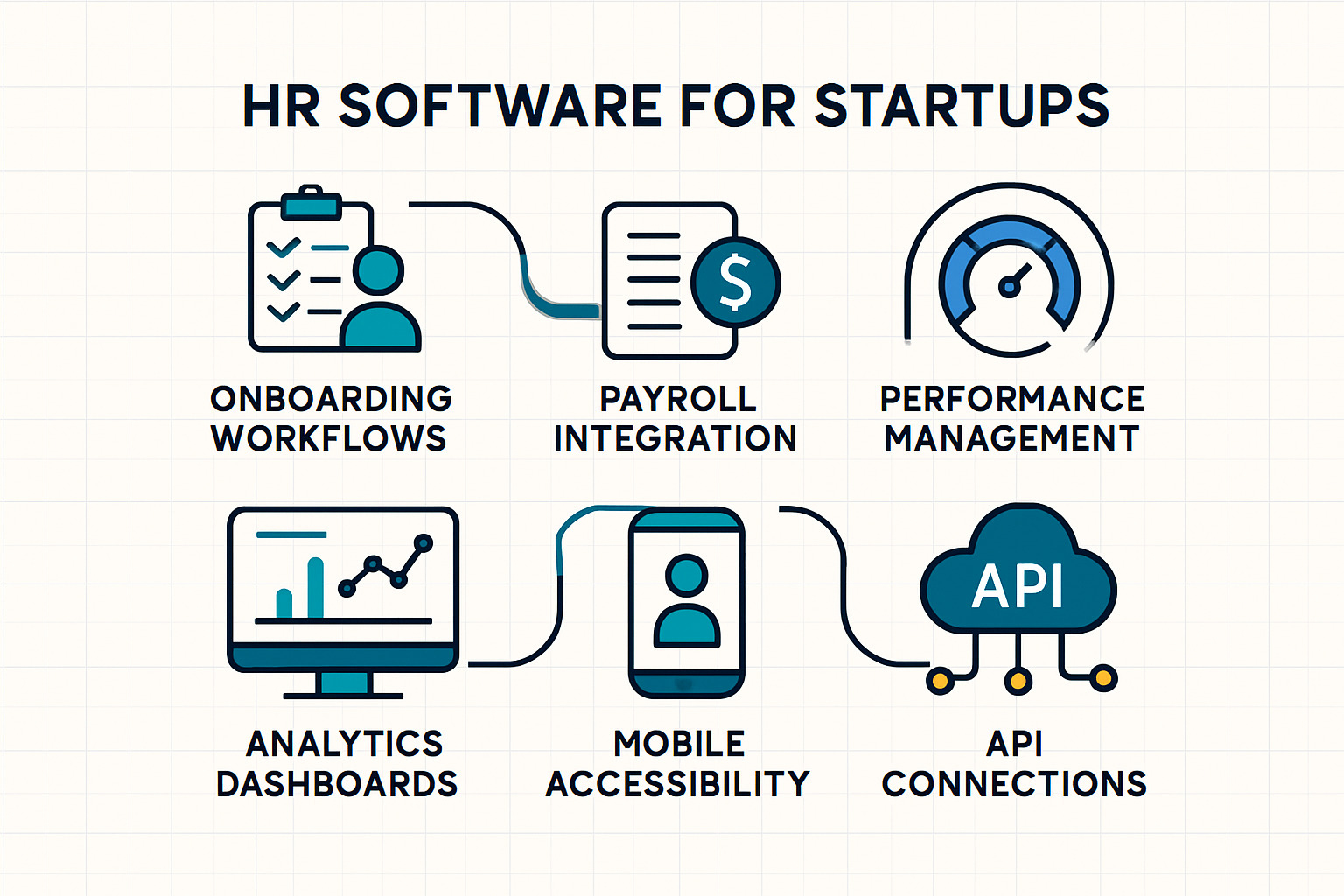
Employee database and onboarding workflows form the foundation of any good system. Look for platforms that let you create custom onboarding checklists, automate new hire paperwork, and track progress in real-time. The best systems start the onboarding process before an employee’s first day, creating a great first impression.
Payroll integration isn’t optional—it’s essential. Manual data entry between HR and payroll systems creates errors and wastes time. Choose platforms that either include payroll or integrate seamlessly with your existing payroll provider. Automated tax filing and compliance alerts are non-negotiable features.
Performance management tools help you maintain your startup culture as you scale. Look for systems that support regular check-ins, goal tracking, and 360-degree feedback. The best platforms make performance conversations ongoing rather than annual events.
Analytics and reporting capabilities turn your people data into actionable insights. You should be able to track hiring metrics, monitor employee satisfaction, identify trends, and generate compliance reports without manual data manipulation.
Mobile apps are crucial for modern workforces. Your team should be able to request time off, clock in/out, and access important information from their phones. This is especially important for remote teams or businesses with field workers.
API integrations ensure your HR system plays well with your existing tech stack. Whether you’re using Slack for communication, Google Workspace for productivity, or custom tools for your business, seamless integrations eliminate data silos and improve workflows.
Integrations & automation capabilities
The power of modern HR software for startups lies not just in what it does, but how well it connects with your existing tools. Here’s what to look for:
Zapier integrations open up hundreds of automation possibilities. You can automatically create Slack channels for new hires, add employees to mailing lists, or trigger welcome sequences in your CRM. The best HR platforms offer pre-built Zapier templates for common workflows.
Single sign-on (SSO) capabilities reduce password fatigue and improve security. When employees can access HR tools through the same login they use for other business applications, adoption rates increase dramatically.
Webhook triggers enable real-time data synchronization. When an employee updates their information or requests time off, webhooks can instantly notify other systems or trigger automated responses.
API-first architecture future-proofs your investment. Even if a specific integration doesn’t exist today, API access ensures you can build custom connections as your needs evolve.
Security and compliance boosters
Startups handle sensitive employee data from day one, making security and compliance critical considerations:
GDPR and data privacy compliance protect both your employees and your business. Look for platforms that offer data processing agreements, consent management, and the ability to handle data deletion requests.
SOC 2 Type II certification demonstrates that a vendor takes security seriously. This certification covers security, availability, processing integrity, confidentiality, and privacy controls.
Two-factor authentication should be standard, not optional. Both administrators and employees should be able to secure their accounts with additional authentication factors.
Audit logs provide visibility into who accessed what data and when. This is crucial for compliance reporting and investigating potential security incidents.
HR Software for Startups: 5 Solution Archetypes That Win in 2025
After analyzing dozens of platforms and hundreds of user reviews, we’ve identified five distinct categories of HR software for startups that consistently deliver results. Each archetype serves different needs and growth stages:
| Archetype | Best For | Price Range | Key Strength |
|---|---|---|---|
| All-in-One HRIS | Rapid growth, 15-100 employees | $8-25/employee/month | Complete employee lifecycle |
| Payroll-First Suite | Compliance-focused, multi-state | $40-135/month + per employee | Automated tax filing |
| Global Workforce Manager | Remote teams, international hiring | $50-600/month + per employee | 150+ country support |
| Culture & Engagement Toolkit | High-growth, retention-focused | $4-15/employee/month | Employee satisfaction tracking |
| Budget-Friendly Freemium | Bootstrap startups, under 10 employees | Free-$8/employee/month | Cost-effective basics |
Best All-In-One HRIS for rapid growth – HR software for startups
Comprehensive platforms in this category offer complete employee databases with integrated workflows for the entire employee lifecycle.
Core database functionality centralizes all employee information in one place. Instead of maintaining separate spreadsheets for contact info, job details, and performance data, everything lives in a single, searchable system. This eliminates data inconsistencies and makes reporting much easier.
PTO tracking and approval workflows automate one of the most common HR headaches. Employees can request time off through mobile apps, managers get automatic notifications, and the system tracks accruals and balances automatically. No more email chains or forgotten requests.
Modular pricing lets you start with basic features and add capabilities as you grow. Most platforms in this category offer tiered pricing where you can add payroll, advanced reporting, or performance management modules when you’re ready.
Leading platforms in this category serve thousands of businesses and maintain high user satisfaction ratings. Users consistently praise intuitive interfaces and comprehensive feature sets that grow with their companies.
Best Payroll-First Suite – HR software for startups
Payroll-focused platforms dominate this category, serving hundreds of thousands of businesses with HR and payroll solutions that put compliance and accuracy first.
Automated tax filing eliminates the complexity of multi-state payroll. These systems automatically calculate, file, and pay federal, state, and local taxes. They even handle new hire reporting and unemployment insurance claims. For startups expanding across state lines, this feature alone can save thousands in accounting fees.
Multi-state compliance becomes manageable with automated alerts and built-in guidance. The platform tracks changing regulations and notifies you when action is needed. Whether it’s updating minimum wage rates or handling new sick leave laws, these systems keep you compliant automatically.
Benefits administration integrates seamlessly with payroll processing. Employees can enroll in health insurance, set up retirement contributions, and manage other benefits through the same platform they use to view pay stubs. This integration eliminates errors and reduces administrative overhead.
Pricing in this category is typically transparent and scalable, with base monthly fees plus per-employee charges. Most platforms offer free trials and maintain consistently high user satisfaction ratings.
Best Global Workforce Manager
Specialized platforms excel at helping startups build distributed teams compliantly across multiple countries.
EOR (Employer of Record) support lets you hire full-time employees in countries where you don’t have a legal entity. The platform handles employment contracts, local compliance, benefits, and termination procedures according to local laws. This is crucial for startups wanting to access global talent without the complexity of international business setup.
Contractor payment and compliance streamlines working with freelancers and consultants worldwide. These platforms handle currency conversion, tax documentation, and payment processing while ensuring compliance with local contractor classification laws.
Multi-currency payroll supports teams spread across different countries and currencies. Employees can be paid in their local currency while you maintain centralized reporting and budget control in your home currency.
Leading platforms in this category support payroll, taxes, compliance, and benefits in over 150 countries and process millions of hires annually across dozens of countries. Most offer free HRIS modules with paid upgrades for payroll and compliance services.
Best Culture & Engagement Toolkit
Culture-focused platforms concentrate on building strong company culture and keeping employees engaged as startups scale.
Pulse surveys and feedback tools help you monitor employee satisfaction and identify issues before they become problems. Regular, anonymous surveys provide insights into team morale, management effectiveness, and areas for improvement.
360-degree feedback systems facilitate comprehensive performance reviews that include input from peers, direct reports, and managers. This approach provides more balanced feedback and helps identify development opportunities.
Recognition and rewards programs make it easy to celebrate achievements and reinforce company values. These platforms often include peer-to-peer recognition, milestone celebrations, and reward point systems.
Top platforms in this category help thousands of companies globally align employees to their most critical objectives. Many include AI-powered features that can answer policy questions and help with career development planning.

Best Budget-Friendly Freemium Option
Affordable platforms offer robust functionality at startup-friendly prices, with generous free tiers for small teams.
Free tier limitations typically include user caps (10-25 employees) or feature restrictions, but provide enough functionality for early-stage startups to get organized and establish good habits.
User caps and upgrade paths are clearly defined, so you know exactly when you’ll need to start paying and what additional features you’ll get. Most platforms offer smooth upgrade paths that preserve your data and configurations.
Open-source flexibility is available through various platforms, though these require technical expertise to implement and maintain.
Budget-friendly options often start at $2-8 per employee per month and have saved users an average of 60% of working hours through automation. Many serve thousands of companies daily, with high satisfaction ratings for their onboarding processes and ease of use.
Implementing HR Software Without the Headache
Let’s be honest—buying great HR software for startups is only half the battle. The real challenge comes when you’re staring at a shiny new platform, wondering how to get your team to actually use it without causing a workplace revolt.
We’ve watched too many founders invest in powerful HR tools only to see them gather digital dust because implementation went sideways. The good news? With the right approach, you can avoid these pitfalls entirely.
Getting everyone on board starts before you even pick a vendor. Your team needs to feel heard, not steamrolled. Sit down with the people who will actually use the system daily—your office manager who processes payroll, the team lead who approves time off, even your newest hire who just went through onboarding. Their insights will save you from costly surprises later.
Your existing employee data is probably messier than a startup’s first office. Before you migrate anything, take a hard look at what you’ve got. Are job titles consistent? Do you have complete contact information for everyone? Those spreadsheets you’ve been meaning to clean up? Now’s the time. Trust us—fixing data problems after migration is like trying to untangle Christmas lights in the dark.
Rolling out everything at once is a recipe for chaos. Start with the basics that solve your biggest pain points. Maybe that’s getting everyone’s information in one place, or finally automating your time-off requests. Once those are humming along smoothly, add payroll integration. Then performance reviews. This way, your team can actually learn each piece instead of feeling overwhelmed.
For deeper insights on making data-driven decisions that stick, check out our comprehensive guide on Business Analysis: Using Data for Making Effective Decisions.
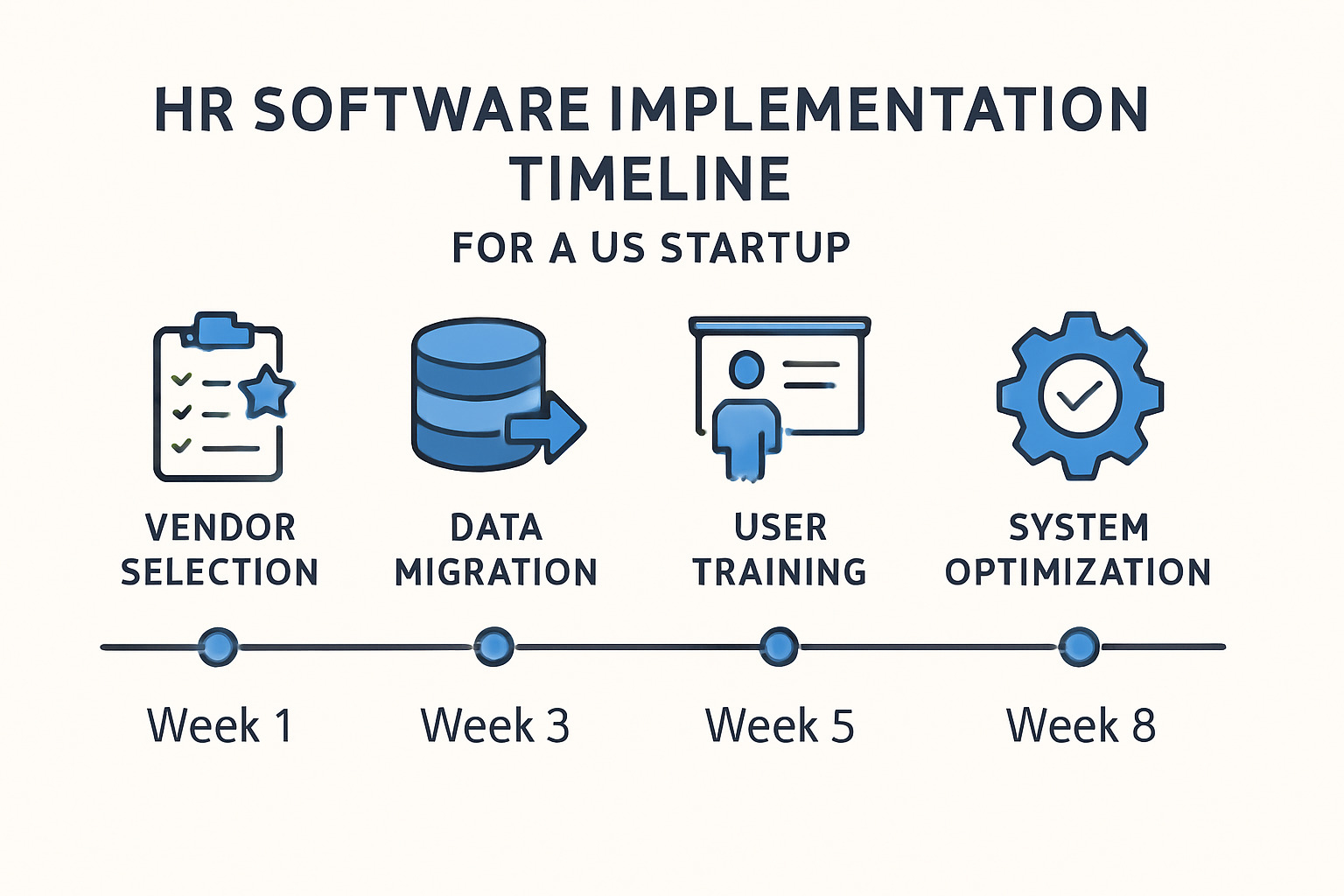
Common adoption challenges & how to overcome them
Dirty data will sink your implementation faster than a leaky startup. You’ll find employees listed with three different job titles, missing emergency contacts, and birthday fields showing dates from 1900. The fix isn’t glamorous—you need to roll up your sleeves and clean house before importing anything. Set aside a weekend, order pizza, and make it a team effort if needed.
Low user adoption happens when systems feel like punishment instead of progress. If your team can’t immediately see how the new platform makes their lives easier, they’ll find creative ways to avoid using it. Focus on features that provide instant gratification—like mobile time-off requests or easy access to pay stubs. Save the complex reporting features for later.
Integration problems can turn your dream system into a nightmare. That seamless connection between your HR platform and accounting software? Test it thoroughly before going live. Have backup plans ready. And please, don’t schedule your first live payroll run on a Friday before a three-day weekend.
Measuring ROI after launch
Time savings show up quickly and dramatically. Before implementation, track how long it takes to process payroll, onboard a new hire, or generate a headcount report. After launch, measure the same tasks. You’ll likely find processes that took hours now take minutes. One founder told us she went from spending an entire day on monthly payroll to finishing it during her lunch break.
Error reduction might be subtle but saves serious money. Count payroll corrections, compliance violations, or duplicate data entries before and after. Even small improvements compound over time. Avoiding just one IRS penalty or wrongful termination lawsuit can justify your entire software investment.
Employee satisfaction improvements appear in unexpected places. People stop complaining about not being able to check their vacation balance. New hires rave about smooth onboarding experiences. Managers appreciate automated approval workflows. These might seem small, but they add up to a much happier workplace.
Frequently Asked Questions about Startup HR Tech
What are the main benefits of HR software in a startup environment?
HR software for startups delivers five key benefits that directly impact your bottom line:
Time savings are immediate and substantial. Automating routine tasks like payroll processing, time-off requests, and employee onboarding can save 60% of administrative time. One user reported reducing payroll time from a full day to less than an hour monthly.
Error reduction protects your business from costly mistakes. Manual payroll calculations, compliance tracking, and data entry are prone to human error. Automated systems with built-in checks eliminate most of these risks.
Improved employee experience boosts satisfaction and retention. When team members can access their information, request time off, and complete onboarding tasks through user-friendly interfaces, they’re happier and more engaged.
Compliance automation reduces legal risks. HR software tracks changing regulations, generates required reports, and alerts you to potential issues before they become problems. This is especially valuable for startups lacking dedicated HR expertise.
Scalability lets you grow without proportionally increasing administrative overhead. Systems that handle 10 employees can usually manage 100 with minimal additional effort.
How much does HR software typically cost for startups?
Pricing varies significantly based on features and company size, but here are realistic ranges:
Free tiers are available from platforms like Deel (HRIS only), Homebase (unlimited employees, one location), and Connecteam (up to 10 users). These work well for very early-stage startups.
Budget options range from $2-8 per employee per month. TalentHR starts at $2/user, while Factorial begins at $8 per employee monthly. These platforms offer core HR functionality without premium features.
Mid-range solutions cost $8-25 per employee monthly. BambooHR, HiBob, and similar all-in-one platforms fall into this range. They include comprehensive features suitable for growing startups.
Premium platforms can cost $25-50+ per employee monthly when you add advanced features like AI-powered analytics, advanced reporting, or specialized compliance tools.
Payroll-first suites like Gusto use base fees plus per-employee charges. Gusto’s Simple plan costs $40/month + $6 per person, while Premium is $135/month + $16.50 per person.
The key is matching features to your actual needs. A 5-person startup doesn’t need the same capabilities as a 50-person company.
Can HR software support a fully remote and global team?
Absolutely, and it’s often easier than managing co-located teams. Modern HR software for startups is built for distributed workforces:
Global payroll and compliance are handled automatically by platforms like Deel and Oyster HR, which support operations in 150+ countries. They manage local employment laws, tax requirements, and currency conversions.
Time zone management is built into most modern platforms. Employees can access systems 24/7, submit requests, and complete tasks regardless of location. Managers get notifications and can approve items on their own schedules.
Mobile-first design ensures team members can access HR tools from anywhere. Whether they’re working from home, a coffee shop, or a different continent, core functionality is available through smartphone apps.
Document management eliminates the need for physical paperwork. Contracts, tax forms, and other documents can be signed electronically and stored securely in the cloud.
Integration capabilities connect HR systems with communication tools like Slack, project management platforms, and other remote-work essentials.
The biggest consideration is choosing platforms that support your specific countries and compliance requirements. Research local employment laws and tax obligations before selecting a global HR solution.
Conclusion
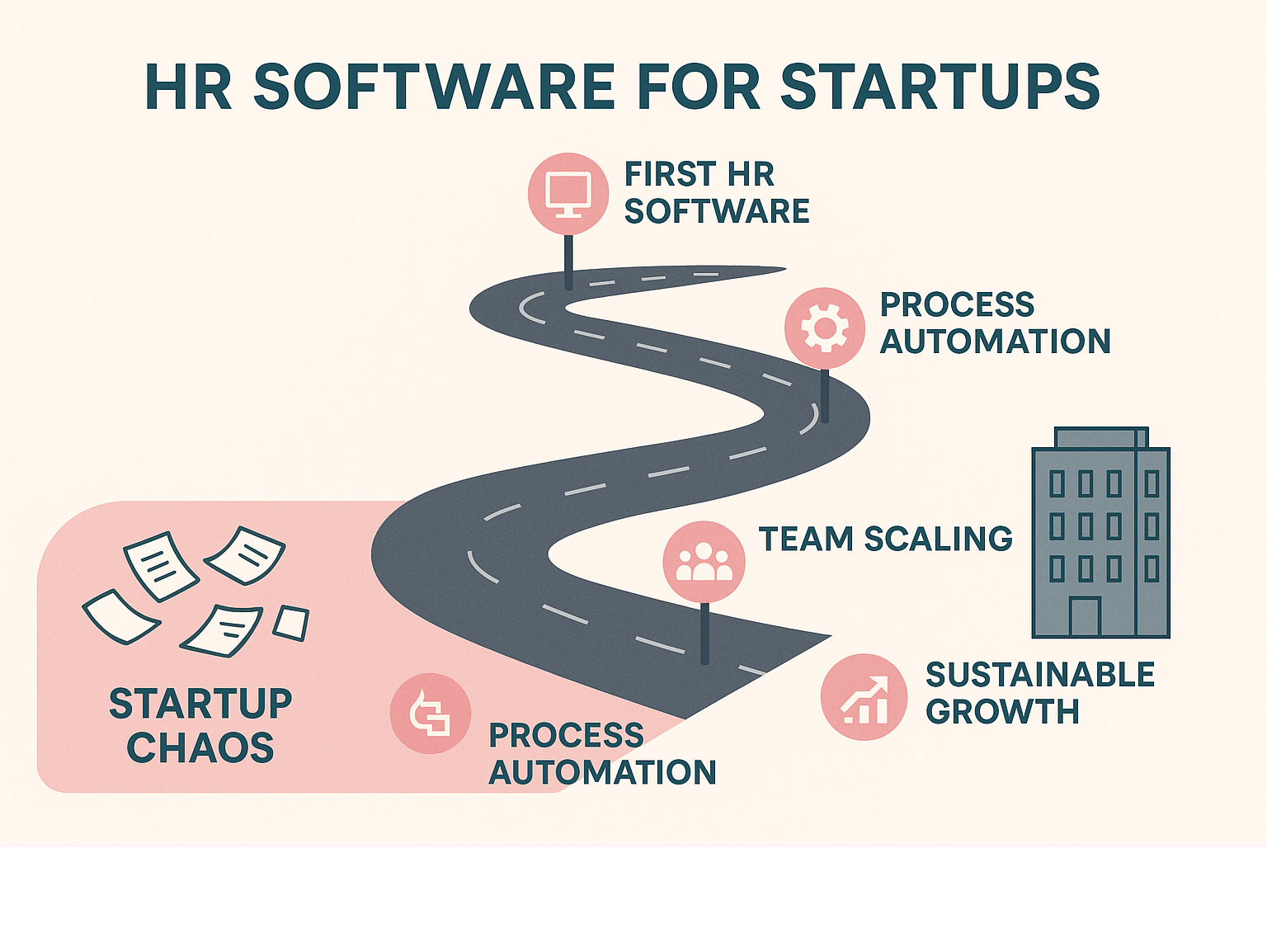
HR software for startups isn’t just about replacing spreadsheets—it’s about building the foundation for sustainable growth. The companies that scale successfully are those that invest in people operations early, before manual processes become overwhelming bottlenecks.
Your action plan should start with identifying your biggest HR pain points. Are you spending too much time on payroll? Struggling with compliance? Having trouble onboarding new hires efficiently? Match these challenges to the solution archetypes we’ve outlined.
Scale confidently by choosing platforms that grow with you. The $2/employee solution that works for your 5-person team should have clear upgrade paths to handle 50 or 500 employees. Avoid platforms that will require complete replacement as you grow.
Create a single source of truth for all employee data. Whether you choose an all-in-one HRIS or best-of-breed solutions, ensure your systems integrate well and provide consistent, accurate information across your organization.
The startups that thrive in 2025 and beyond will be those that leverage technology to handle routine tasks while focusing human energy on innovation, customer service, and strategic growth. HR software for startups is no longer a luxury—it’s a competitive necessity.
At TheEntrepreneurs.net, we’re committed to helping founders make smart technology decisions that accelerate growth. Our expertise in business operations and technology implementation gives us unique insights into what actually works for growing companies.
Ready to dive deeper into HR technology and business growth strategies? Explore our comprehensive collection of guides and resources at our HR technology section.
The future belongs to startups that can hire efficiently, inspire consistently, and manage transitions smoothly. With the right HR software foundation, that future starts today.