
Why Content Performance Analytics Are Essential for Business Growth
Content performance analytics tools are software solutions that track, measure, and analyze how your content performs across different channels and platforms. These tools help you understand what content resonates with your audience, drives conversions, and generates real business results.
Top content performance analytics tools include:
- Google Analytics – Free web analytics with content performance tracking
- Parse.ly – Content-focused analytics for publishers and marketers
- HubSpot Marketing Hub – All-in-one platform with content ROI tracking
- SEMrush – SEO and content marketing analytics suite
- Hotjar – User behavior analytics with heatmaps and recordings
- Mixpanel – Event-based analytics for content engagement
- BuzzSumo – Content performance and social media analytics
If you’re struggling to prove your content marketing ROI, you’re not alone. According to a recent industry survey published by Statista, 82 % of marketers are actively engaged in content marketing, spending an average of 26 % of their budget on content production. Yet multiple studies show that two of the three biggest content marketing challenges companies face relate to producing the right type of content.
The problem? Most entrepreneurs are creating content in the dark. They’re guessing what works, hoping for the best, and wondering why their content isn’t driving the growth they need.
Data changes everything.
When you can see which blog posts drive the most leads, which social media content gets shared, and which email campaigns convert best, you stop guessing and start growing. Companies using content analytics report impressive results: 122 % increases in organic search traffic, 75 % revenue growth, and 400 % subscriber growth.
The good news is that today’s content performance analytics tools make it easier than ever to measure what matters. You don’t need to be a data scientist to understand which content drives results.
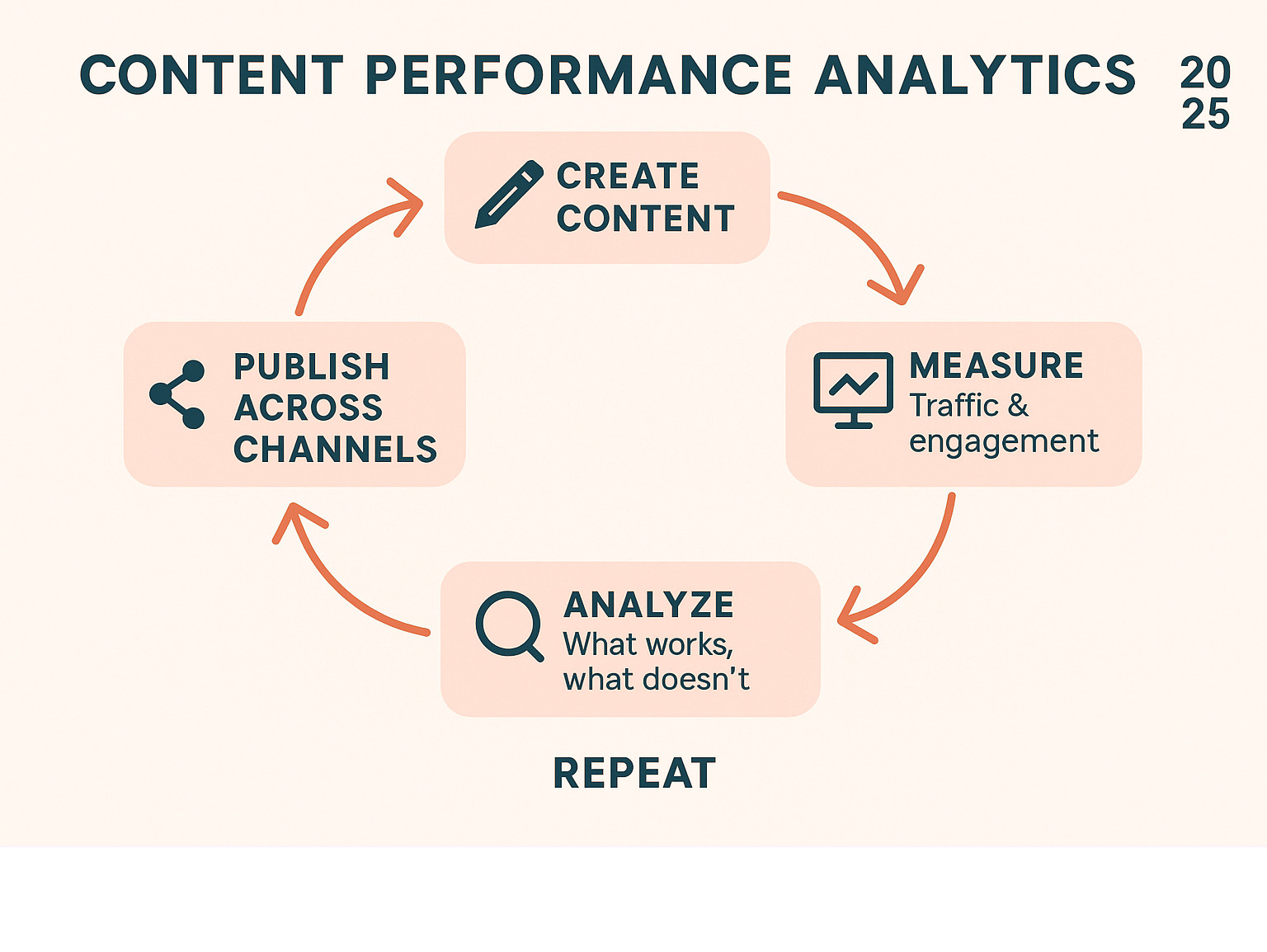
Why Analytics Are Your Content Strategy’s Secret Weapon
Let’s be honest—creating content without data is like driving blindfolded.
Content performance analytics tools shine headlights on the road ahead, turning marketing from guesswork into a predictable growth engine. Every post, email, or video is an investment, and data shows which ones actually move leads through the funnel.
Learn more about Business Analysis Using Data For Making Effective Decisions and Effective And Timely Decisions In Business Intelligence.
Understand and Optimize Your Performance
Analytics surface patterns you would otherwise miss.
- How-to guides often convert 3× better than news recaps.
- Metrics like engaged time, conversion rate, and return visits dig deeper than page views.
- Source and bounce data reveal which channels bring your best readers.
A simple shift from Monday to Tuesday publishing delivered a 20 % lift in conversions for one brand.
Justify Your Efforts and Prove ROI
Modern tools map the full buyer journey with lead and revenue attribution. Instead of vague “decent traffic,” you can report, “47 qualified leads worth $23 k came from the blog last month,” while cutting reporting time in half. See our Email Marketing Guide for details.
Gain a Competitive Edge
Analytics expose industry gaps before competitors notice them. A travel-insurance firm used data to build a focused content hub and achieved:
- 131 % more total traffic
- 883 % more hub visits
- 66 % organic-revenue growth
With roughly 29 rivals chasing the same audience, data-driven decisions keep you ahead. Explore Business Trend Analysis for a deeper dive.
Essential Features to Look For in Content Performance Analytics Tools

Thousands of martech products promise the world; only a few solve real problems. Prioritize features that answer your biggest questions instead of adding more dashboards.
Key must-haves:
- Unified data – end spreadsheet stitching.
- Clear visualizations – insights at a glance.
- Custom, real-time reporting – act on today’s wins.
- Seamless integrations with CRM, CMS, email, and ad tools.
- User-friendly UI – no data science degree needed.
- Attribution & segmentation – know which content converts for which audience.
- Historical tracking & compliance – spot long-term trends without GDPR headaches.
More options don’t automatically mean better results. The right tool eliminates data silos and surfaces the few metrics that drive growth. For extra help vetting software, see our CRM Software Small Business guide.
Top Categories of Content Performance Analytics Tools
Not every platform solves the same problem. Most businesses mix solutions from several buckets:
- All-in-one web analytics
- SEO & content insight tools
- User-behavior platforms
- ROI & attribution specialists
- Social analytics
Start with the category that removes your biggest bottleneck, then expand. See our Digital Marketing For Startups for a broader toolkit.
Foundational Web & All-in-One Analytics Platforms
Google Analytics, HubSpot Marketing Hub and Parse.ly give the 360-degree view—traffic, journeys and conversions—in one place.
- A retailer boosted conversions 18× and cut CPA 85 % after unifying web and app data in Google Analytics.
- HubSpot links every interaction to your CRM, clarifying how content fills the pipeline.
- Parse.ly puts actionable data in writers’ hands.
Get started today with The Entrepreneurs Analytics Suite.
SEO and Content Insights Tools
Need to win the SERP? SEMrush, Ahrefs and Clearscope reveal keywords, backlink gaps and on-page tweaks that lift rankings and organic traffic. Learn more in How To Build A Strong Brand Through Smart Marketing.
User Behavior and Experience Tools

Heatmaps and session replays from Hotjar, Mixpanel and Amplitude expose where readers click, scroll and abandon. Tiny layout tweaks informed by this data often yield big gains.
Find more workflow boosters in our Productivity Tools Review.
Specialized Content Performance Analytics Tools for ROI
When you must tie content to dollars, look at Kapost, Leadfeeder, or ContentWRX. They attribute revenue to individual assets and surface high-value topics, making budget talks painless. Beginners can dive deeper with our Content Marketing For Beginners guide.
How to Select the Best Tool for Your Business
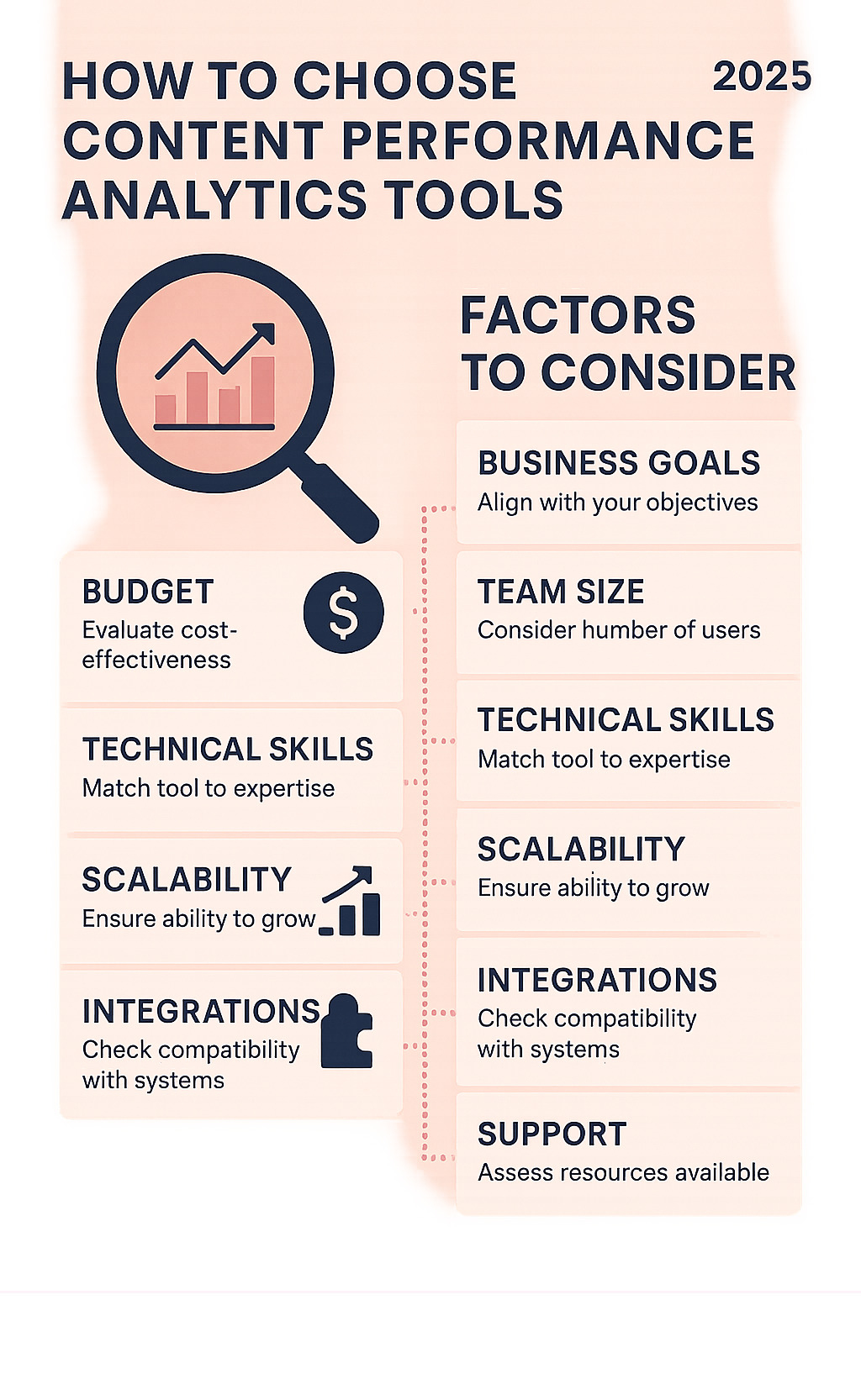
Picking a platform is less about features and more about fit:
- Clarify goals – revenue attribution, UX fixes, or SEO gains?
- Mind the budget – a tool that uncovers a 300 % conversion lift pays for itself.
- Assess skills & team size – choose interfaces your crew can master.
- Plan for scale – free plans often break when you publish daily.
- Check integrations & support – avoid new data silos.
Start with one tool, master it, then layer in others. The best analytics tool is the one your team actually uses. More selection tips in our Small Business Productivity Tools guide.
Frequently Asked Questions about Content Performance Analytics
How do analytics tools help prove content marketing ROI?
By tracking every touchpoint—from the first blog visit to the final purchase—modern platforms assign revenue to the content that influenced the sale. Lead, revenue, and lifetime-value attribution models show exactly how many dollars each article or video generated.
Can I use multiple content analytics tools together?
Yes. Pair complementary platforms—Google Analytics with Hotjar for traffic plus behavior, or SEMrush with Parse.ly for SEO plus engagement. Connect them through native integrations or shared dashboards and avoid manual number crunching.
What’s the difference between content analytics and general web analytics?
Web analytics measure site-wide metrics like sessions or bounce rate. Content analytics zoom in on individual assets—engaged time, shares, conversions—explaining why certain pieces resonate and how to replicate success. Use both for a full forest-and-trees view.
Conclusion
Here’s the bottom line: content performance analytics tools are your ticket from throwing marketing dollars at the wall to building a predictable growth engine. When you can see exactly which blog posts bring in leads, which social media content gets shared, and which email campaigns actually convert, you stop guessing and start growing.
The entrepreneurs who are winning today aren’t necessarily the ones with the biggest budgets or the flashiest content. They’re the ones who accept data-driven decision making. They use analytics to truly understand their audience, fine-tune their content strategy, and show stakeholders exactly how their marketing efforts translate into real revenue.
And here’s the beautiful part – you don’t need a PhD in data science to make this work. The best content performance analytics tools are built for real entrepreneurs who need clear, actionable insights they can act on immediately. You’re not looking for complex algorithms or overwhelming dashboards. You want tools that tell you what’s working, what’s not, and what to do next.
The secret is starting small and building momentum. Pick one or two tools that tackle your biggest headaches right now. Maybe you’re struggling to prove ROI to your business partner, or you can’t figure out why people aren’t engaging with your content. Address those pain points first, then expand your analytics toolkit as your business grows and your needs evolve.
But here’s what really matters: taking action. You can read about analytics tools all day, but the magic happens when you actually implement them. Set up your chosen tool properly, start tracking what matters to your business, and watch as patterns emerge that you never noticed before. These insights will become your roadmap for creating content that actually moves the needle.
At The Entrepreneurs, we know that sustainable growth comes from making smart, informed decisions. Content analytics aren’t just nice-to-have metrics – they’re the foundation of a content strategy that delivers consistent, measurable results month after month.
Ready to transform your content from a cost center into a growth driver? Start by checking out our guide to Find the Top Free Tools You Need For Content Creation. Then implement the analytics tools that will help you measure and optimize every piece of content you create.
Your content has incredible potential to drive business growth. With the right analytics tools guiding your decisions, you can open up that potential and build a content strategy that consistently delivers the results your business needs to thrive.