
Why Real Estate is a Cornerstone of Wealth
A guide to real estate investing starts with understanding why this asset class has created more millionaires than any other investment vehicle. Real estate investments are valued at more than $230 trillion, making them the world’s largest asset class – and for good reason.
Quick Guide to Real Estate Investing:
- Start with your goals – Cash flow, appreciation, or both
- Choose your strategy – Active (flipping, rentals) or passive (REITs, MICs)
- Assess your resources – Time, capital, and risk tolerance
- Research your market – Location, demographics, economic trends
- Secure financing – Mortgages, down payments, debt ratios
- Execute and manage – Purchase, renovate, rent, or hold
Unlike stocks or bonds, real estate offers something unique: tangible assets you can see, touch, and control. You’re not just buying a piece of paper – you’re acquiring physical property that people need for shelter, work, and commerce.
The numbers tell a compelling story. More than one in five Canadian homeowners is an investor, recognizing real estate’s potential for both steady cash flow and long-term appreciation. Historical data shows average home prices have increased tenfold over the past 80 years, even after adjusting for inflation.
What makes real estate particularly attractive for entrepreneurs is its low correlation with other major asset classes. While stocks might crash or bonds might stagnate, people still need places to live and work. This stability, combined with the ability to use leverage (mortgages) to control large assets with relatively small down payments, creates powerful wealth-building opportunities.
Whether you’re looking to generate passive income, build long-term wealth, or diversify your investment portfolio, real estate offers multiple paths to success. From house flipping and rental properties to REITs and mortgage investment corporations, there’s a strategy that fits every entrepreneur’s goals and resources.
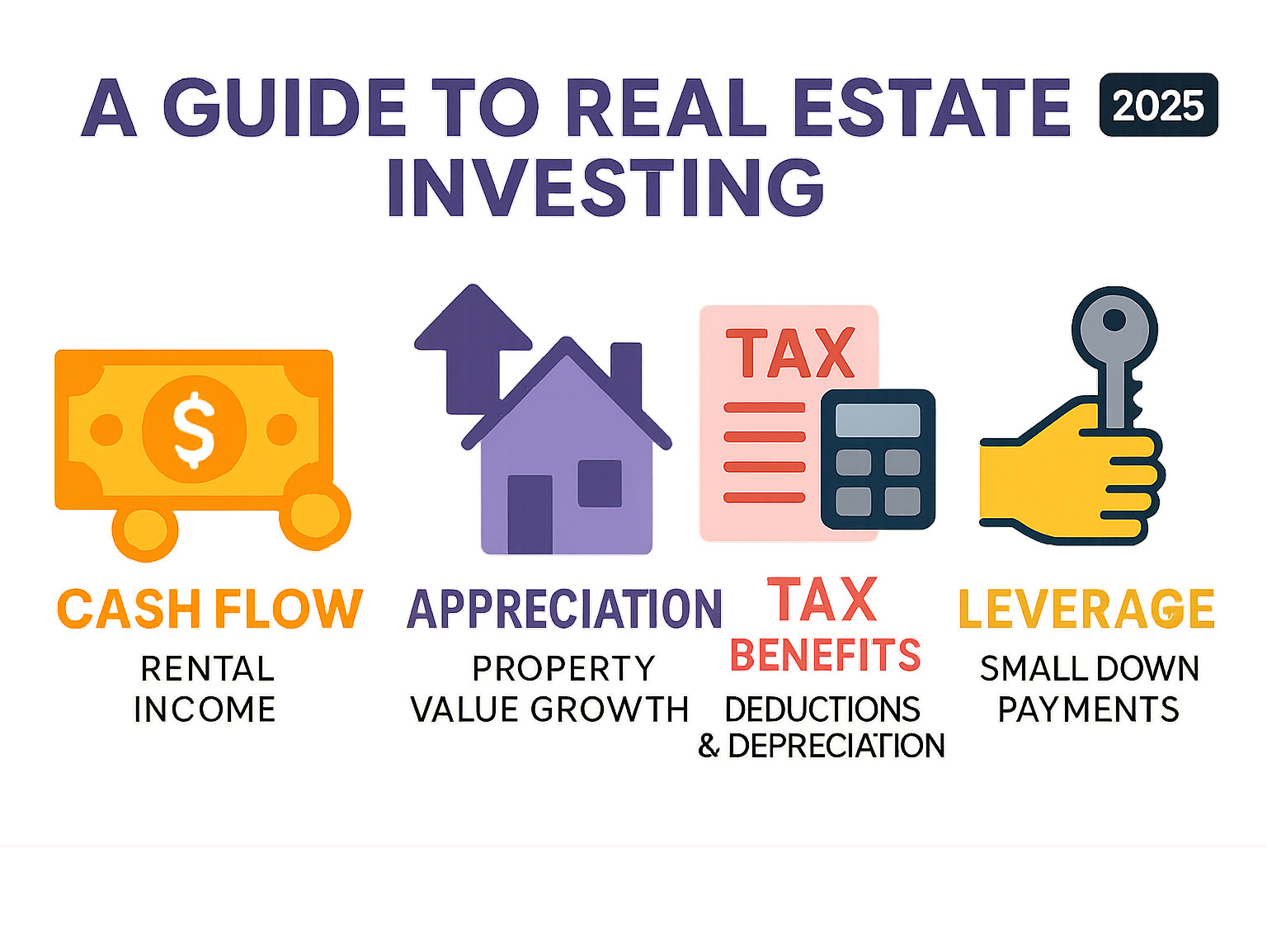
The Appeal of Real Estate: More Than Just a Place to Live
Think of real estate as the Swiss-Army knife of investments. Unlike stocks that exist only as digital entries or bonds that represent a future payment, property is a tangible, improvable asset that can pay you twice: once through rent and again through long-term price growth. That dual benefit is why so many entrepreneurs use it to anchor their portfolios.
The Power of Appreciation and Cash Flow
- Canadian home prices have risen roughly ten-fold since 1940 (after inflation).
- A well-selected rental can target ~9 % total annual yield (rent + appreciation).
- Tenants pay down your mortgage, building equity for you automatically.
Leverage and Tax Advantages
Mortgages let you control large assets for a small down payment—sometimes as little as 5 % on a principal residence. If a $500 000 property rises 5 %, you earn $25 000 on the full value, not just on your down payment. Add in deductions for mortgage interest, maintenance, and Capital Cost Allowance (CCA) and you have a powerful, tax-efficient growth engine. (For a quick primer on leverage, see Real estate investment).
Real Estate vs. Other Investments
| Asset | Liquidity | Volatility | Control | Income |
|---|---|---|---|---|
| Real Estate | Low | Low-Med | High | Rent + Appreciation |
| Stocks | High | High | Low | Dividends + Gains |
| Bonds | Med | Low | Low | Interest |
| REITs | High | Med | Low | Dividends |
Because shelter is a basic human need, property values often hold up when markets stumble, and rents typically rise with inflation—making real estate an effective hedge and a steady wealth-builder.
A Guide to Real Estate Investing Strategies
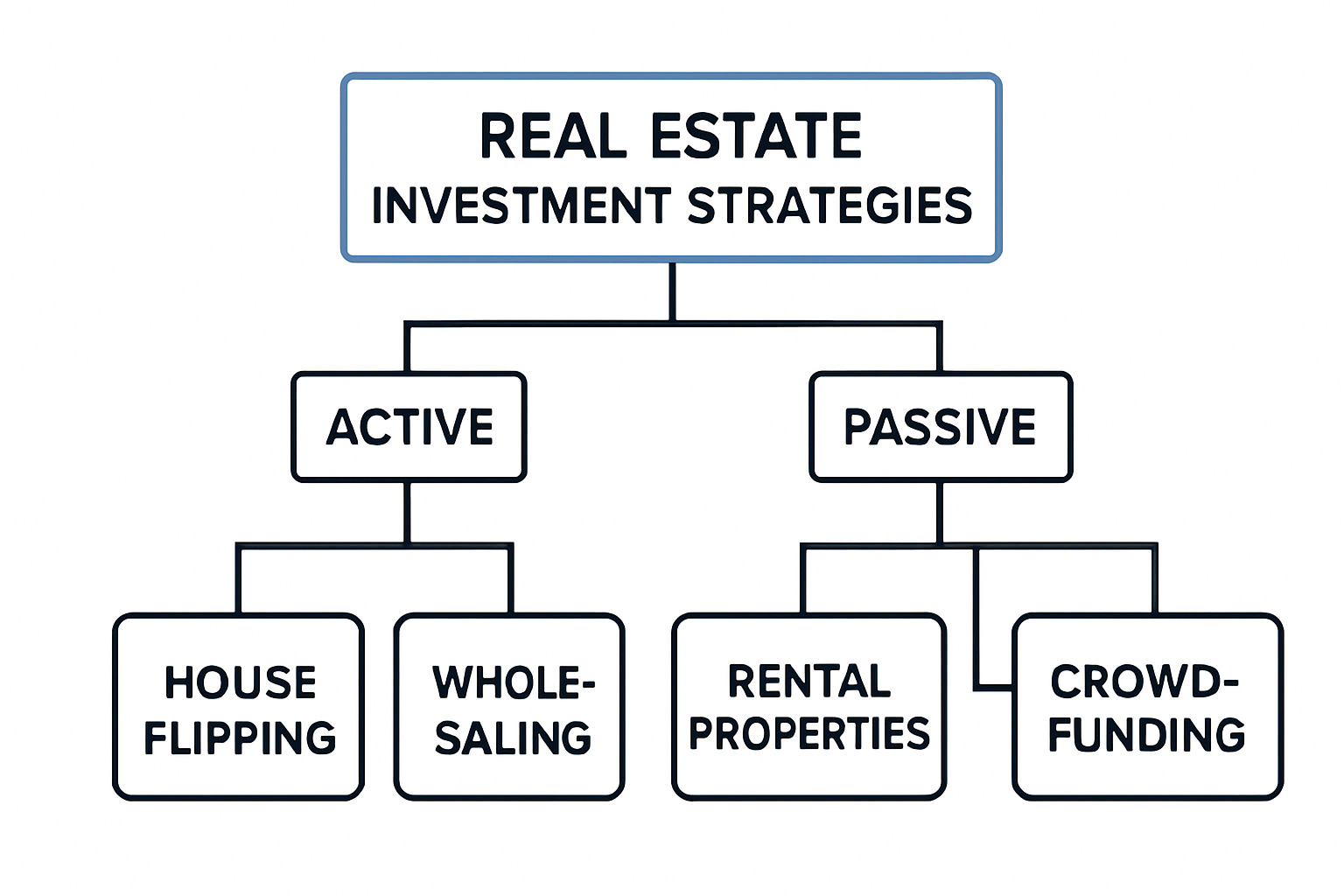
Whether you have lots of spare time or almost none, there’s a real-estate strategy that fits. Below are the big three buckets—pick the one that matches your capital, schedule, and risk tolerance.
1. Active Investing
- Flipping: Buy undervalued homes, renovate, sell. Follow the 70 % rule (pay ≤ 70 % of ARV minus repairs) to protect margins.
- Pre-sale condo assignments: Sell the purchase contract before completion—profits without holding costs.
- Land development: Turn raw land into finished lots. High reward, high complexity—best left for experienced operators.
2. Buy-and-Hold (Long-Term Growth)
- Target properties that meet the 1 % rule (monthly rent ≈ 1 % of purchase price).
- House hacking: Live in one unit of a duplex or triplex, rent the others. Great for first-timers.
- Residential is easier to finance; commercial can deliver higher yields but requires bigger capital and expertise.
3. Passive Investing
- REITs: Trade like stocks and must distribute 90 % of taxable income as dividends.
- Mortgage Investment Corporations (MICs): You finance mortgages, earning interest instead of rent.
- Crowdfunding: Online platforms pool investors into larger deals—often limited to accredited investors.
Start active if you want control and sweat equity; stay passive if you prefer diversification without the 2 a.m. plumbing calls.
Your Pre-Investment Playbook: Key Factors for Success
Preparation separates profitable investors from frustrated landlords. Run through this checklist before signing any purchase agreement.
Market & Property Analysis
- Check job growth, population trends, and upcoming infrastructure.
- Compare recent sales and current rents to confirm demand.
- Always order a professional inspection and review local zoning.
Financing Essentials
- Aim for a debt-to-income ratio ≤ 43 % including the new mortgage.
- Down payments: 5 % (owner-occupied) to 25 % (pure investment).
- First-time buyers can withdraw up to $35 000 from RRSPs via the Home Buyers’ Plan.
- Shop at least three lenders or use a broker—¼ % off your rate can save thousands.
Must-Have Skills
- Basic cash-flow math (cap rate, ROI).
- Negotiation & clear communication.
- Project management for renovations.
- Patience—real estate rewards those who hold through cycles.
Navigating Risks and Challenges in Real Estate
Let’s be honest – a guide to real estate investing wouldn’t be complete without talking about the bumps in the road. Every investment has its challenges, and real estate is no different. The good news? Understanding these risks ahead of time helps you prepare and make smarter decisions.
Think of risk management like wearing a seatbelt. You’re not expecting to crash, but you’re prepared just in case. The same mindset applies to real estate investing.
Market Volatility and Economic Downturns
Real estate markets move in cycles, just like the weather. Sometimes you get sunny skies with rising prices, and sometimes you face storms with declining values. Interest rate changes hit particularly hard – when rates climb, mortgage costs increase, making it harder for buyers to afford properties.
Here’s what many new investors don’t realize: the key to surviving market downturns is having enough cash reserves and avoiding the temptation to borrow too much. Properties held long-term typically bounce back from temporary market dips, but you need the financial staying power to ride out the storm.
Housing bubbles can create a false sense of security. Prices seem to climb forever, until they don’t. While nobody can time the market perfectly, understanding your local market fundamentals helps you spot when things might be getting overheated.
Real estate remains a safe long-term investment despite short-term volatility. The families who bought homes in 2008 and held onto them through the recession came out ahead. It’s all about having the patience and financial cushion to weather the tough times.
Operational and Liquidity Problems
Here’s where real estate investing gets real. Tenant vacancies can quickly turn your profitable property into a monthly expense. That $1,500 rental income disappears, but your mortgage payment doesn’t. Smart investors budget for vacancy periods and keep enough reserves to cover several months of mortgage payments.
Unexpected repairs are part of the game. Your water heater will pick the worst possible moment to break down, usually right after you’ve paid your taxes. Setting aside 1-2% of your property’s value annually for maintenance helps you handle these surprises without breaking a sweat.
Property management issues can consume your time and energy. Dealing with late-night emergency calls, difficult tenants, and maintenance requests isn’t everyone’s cup of tea. Many investors underestimate the time commitment involved in being a landlord.
The illiquidity of direct ownership presents another challenge. Unlike stocks that you can sell with a few clicks, real estate takes weeks or months to sell. This lack of liquidity can be problematic if you suddenly need access to your capital for other opportunities or emergencies.
Understanding Capital Gains Tax
When you sell an investment property for more than you paid, the government wants its share of your success. In Canada, 50% of capital gains are taxable at your marginal tax rate. If you made $100,000 profit on a property sale, you’ll pay tax on $50,000 of that gain.
Recent discussions about changes to the capital gains tax rate highlight why tax planning matters. What seems like a great investment return can shrink significantly after taxes, so it’s crucial to factor this into your calculations from the start.
Strategic tax planning can help minimize the impact on your investment returns. The timing of your sales, understanding available exemptions, and structuring your investments properly all play a role. This is definitely an area where consulting with tax professionals pays for itself.
The bottom line? These challenges shouldn’t scare you away from real estate investing, but they should make you more prepared. Every successful investor has faced these issues and learned to manage them. With proper planning and realistic expectations, you can steer these challenges and build wealth through real estate.
The 2025 Canadian Real Estate Market: A Look Ahead

Policy shifts are giving investors fresh tailwinds.
Key Changes
- Bank of Canada cut its policy rate to 3.25 % (Dec 2024), lowering mortgage costs.
- 30-year amortizations for first-time buyers/new builds boost cash flow.
- Mortgage-insurance cap raised to $1.5 million, opening pricey markets like Toronto and Vancouver to lower-down-payment buyers.
Opportunities
- Industrial, self-storage, and data-centre properties benefit from e-commerce and cloud growth.
- ESG-compliant buildings command premium rents.
- PropTech (smart locks, automated tenant screening) reduces operating costs and vacancy.
Bottom line: cheaper financing plus tech-driven efficiency make 2025 a promising entry point—especially if you act before competition heats up.
Frequently Asked Questions
Is real-estate investing still worth it in Canada?
Yes. Population growth and limited housing supply continue to support both rents and prices. More than 20 % of Canadian homeowners already invest in property.
Best way for a beginner to start?
If time and money are tight, buy a diversified REIT through your brokerage. Want hands-on learning? Try house hacking—live in one unit, rent the rest.
How much money do I need?
REITs start at <$100. Direct ownership requires a down payment (5–25 % of the price), closing costs (~2 %), and a reserve fund for repairs/vacancy.
Conclusion: Building Your Real Estate Empire
Think of real estate investing as planting an oak tree rather than growing lettuce. Real estate investing is a marathon, not a sprint – it rewards patience, consistency, and smart decision-making over time. The wealth-building potential is enormous, but it requires a long-term mindset and steady commitment.
This guide to real estate investing has walked you through proven strategies that have created millionaires for generations. Whether you’re drawn to the hands-on approach of flipping houses, the steady income of rental properties, or the simplicity of REIT investing, you now have the roadmap to get started.
The beauty of real estate lies in its flexibility. You can start small with a few hundred dollars in REITs, test the waters with house hacking, or dive deep into active investing if you have the capital and time. There’s no single “right” way – only the way that fits your current situation and goals.
Success requires research, planning, and patience above all else. The investors who thrive are those who do their homework, understand their local markets, and resist the urge to make emotional decisions during market ups and downs. They focus on fundamentals like cash flow, location, and long-term value rather than trying to time the perfect market entry.
Every real estate mogul started with their first property or first investment. The key is taking that first step, learning from experience, and building momentum over time. Real estate markets will always have cycles, but the long-term trend has consistently rewarded patient investors.
At TheEntrepreneurs.net, we understand that building wealth through real estate is just one piece of your entrepreneurial journey. That’s why we provide comprehensive resources covering every aspect of business growth, from financing strategies to market analysis to personal development.
Your real estate empire won’t be built overnight, but with the right knowledge, careful planning, and consistent action, it can provide the financial freedom and security that every entrepreneur seeks. The strategies are proven, the opportunities are there, and the tools are in your hands.
Now it’s time to turn knowledge into action and start building your real estate legacy.