
Why Crypto Day Trading Demands a Strategic Approach
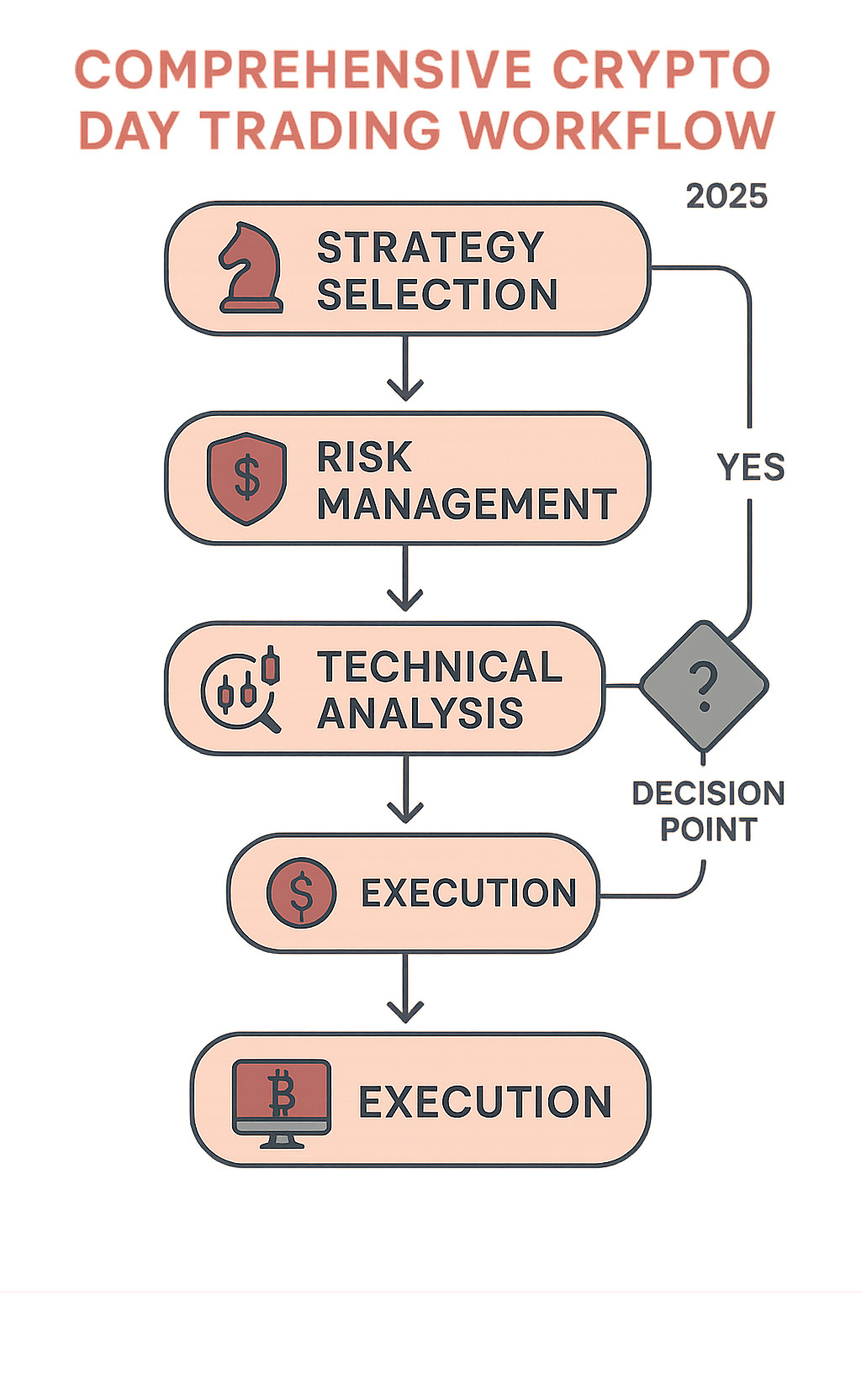
The best crypto day trading strategies combine technical analysis, risk management, and disciplined execution to profit from cryptocurrency’s extreme volatility. Unlike traditional markets that close at 4 PM, crypto never sleeps – creating both massive opportunities and significant risks around the clock.
Top Crypto Day Trading Strategies:
- Scalping – Quick 1-5 minute trades capturing small price movements
- Momentum Trading – Riding strong price trends with volume confirmation
- Range Trading – Buying support, selling resistance in sideways markets
- Breakout Trading – Entering when price breaks key levels with volume
- Arbitrage – Exploiting price differences across exchanges
- Automated Bot Trading – Using algorithms for consistent execution
As one experienced trader noted: “The crypto market has spawned an army of day traders and long-term blockchain adherents in recent years, but results rarely match the hype.” This reality check highlights why having a solid strategy matters more than gambling on price movements.
With 51 million active crypto traders worldwide (about 0.6% of the global population), the competition is fierce. Daily price swings of 5-20% create profit potential that traditional markets can’t match – but they also amplify losses for unprepared traders.
The 24/7 nature of crypto markets means opportunities never stop. Bitcoin can surge 10% while you sleep, or crash 15% during lunch. This constant volatility rewards traders who understand when to trade, what to trade, and most importantly – when to stop.
Most successful crypto day traders don’t rely on luck or gut feelings. They use proven strategies, manage risk religiously, and treat trading like a business. The research shows that disciplined execution often matters more than finding the “perfect” strategy.
What Is Crypto Day Trading & How It Differs From Stocks
Crypto day trading means buying and selling cryptocurrency assets within the same trading session to profit from short-term price fluctuations. Unlike holding coins for weeks or months, day traders close all positions before the day ends, avoiding overnight exposure to market-moving news.
The fundamental difference between crypto and traditional day trading lies in market structure. While stock markets operate during business hours with regulated exchanges and market makers, cryptocurrency markets run 24/7 across hundreds of global exchanges with varying liquidity and pricing.
Here’s how crypto day trading compares to traditional markets:
| Factor | Crypto Day Trading | Traditional Stock Trading |
|---|---|---|
| Market Hours | 24/7/365 | 9:30 AM – 4:00 PM EST |
| Volatility | 5-20% daily swings | 1-3% typical daily moves |
| Entry Barriers | No minimum capital | $25,000 PDT rule in US |
| Regulation | Minimal oversight | Heavy SEC regulation |
| Liquidity | Fragmented across exchanges | Centralized market makers |
| Settlement | Instant | T+2 days |
Speed, Access & Market Hours
Crypto markets offer direct market access without traditional brokers or intermediaries. You can trade directly on exchanges like Binance, Coinbase, or Kraken, placing orders that execute within seconds. This eliminates the delays and fees associated with stock brokers.
The continuous trading sessions mean price findy never stops. While New York sleeps, Asian markets drive crypto prices. European traders wake up to completely different market conditions than when they went to bed. This creates unique opportunities for traders who can monitor multiple time zones.
Volatility & Opportunity
Cryptocurrency’s extreme volatility creates profit opportunities that traditional markets simply can’t match. Daily price swings of 5-20% are common, compared to typical 1-3% moves in stocks. Some traders report earning hundreds or even thousands of dollars daily from these dramatic price movements.
News catalysts hit crypto markets harder and faster than traditional assets. A single tweet from an influential figure can trigger 10-15% price moves within minutes. Regulatory announcements, exchange listings, or protocol upgrades can create massive volatility spikes that skilled day traders can capitalize on.
The Best Crypto Day Trading Strategies (Core Section)

The best crypto day trading strategies share common elements: clear entry and exit rules, defined risk parameters, and systematic execution. However, each strategy suits different personality types, time commitments, and capital requirements.
Successful crypto day traders typically combine multiple approaches rather than relying on a single method. They might scalp during high-volume periods, switch to range trading during sideways markets, and use breakout strategies when major news hits.
Best Crypto Day Trading Strategies: Quick Overview
Scalping (1-5 minutes): Capturing tiny price movements with tight stops and quick exits. Requires intense focus and low-latency execution.
Momentum Trading (5-60 minutes): Riding strong price trends confirmed by volume and technical indicators. Works best during trending markets.
Range Trading (15 minutes-4 hours): Buying at support levels and selling at resistance in sideways markets. Ideal for consolidation periods.
Breakout Trading (5 minutes-2 hours): Entering when price breaks through key levels with volume confirmation. Effective during high-impact news events.
Arbitrage (Instant-30 minutes): Exploiting price differences between exchanges. Requires quick execution and multiple exchange accounts.
Automated Bot Trading (24/7): Using algorithms to execute trades based on pre-programmed rules. Removes emotional decision-making.
Best Crypto Day Trading Strategies: Choosing What Fits You
Your personality, available time, and capital size determine which strategies work best. Scalping suits traders who thrive on rapid decision-making and can dedicate full attention to charts. Range trading works for those who prefer a more methodical approach with clear entry and exit points.
Consider these factors when choosing your primary strategy:
- Risk Tolerance: Scalping requires accepting many small losses for occasional big wins
- Time Commitment: Some strategies demand constant monitoring while others allow periodic check-ins
- Capital Size: Scalping needs larger positions to overcome fees, while swing trading works with smaller accounts
- Emotional Discipline: High-frequency strategies test your ability to stick to rules under pressure
Scalping for Micro-Moves
Scalping involves making dozens of small trades throughout the day, capturing price movements of 0.1-0.5%. Success depends on tight stop-losses, high liquidity pairs, and keeping transaction costs low.
The most effective scalping setups occur during high-volume periods when bid-ask spreads tighten. Bitcoin and Ethereum typically offer the best scalping opportunities due to their deep order books and consistent volume.
Key scalping principles:
- Risk only 0.2-0.5% per trade with 1:2 risk-reward ratios
- Focus on major pairs with billions in daily volume
- Use 1-minute or 5-minute charts for precise entries
- Set automatic stop-losses to enforce discipline
- Track transaction costs closely as they can erode profits
Momentum & Breakout Plays
Momentum trading capitalizes on strong price movements confirmed by volume and technical indicators. When Bitcoin breaks above resistance with heavy volume, momentum traders jump in expecting the trend to continue.
Breakout strategies work exceptionally well in crypto due to the market’s tendency for explosive moves. A coin might trade sideways for hours, then surge 15% in minutes when breaking key levels.
Effective momentum trading requires:
- Volume confirmation (at least 50% above average)
- Multiple timeframe analysis (5-minute entry, 1-hour trend)
- Clear invalidation levels (stop-loss below breakout point)
- Profit-taking rules (partial exits at key resistance levels)
Range & Mean Reversion
Range trading thrives during consolidation periods when prices bounce between clear support and resistance levels. This strategy works particularly well for major cryptocurrencies that often establish trading ranges during low-volatility periods.
The key to successful range trading is identifying reliable support and resistance levels using multiple timeframes. A level that holds on both 1-hour and 4-hour charts carries more weight than one that only appears on shorter timeframes.
Range trading best practices:
- Wait for at least 3 touches of support/resistance before trading
- Use smaller position sizes near range boundaries
- Set stops just outside the range with 1.5:1 risk-reward minimum
- Be ready to switch strategies if the range breaks
Intraday Swing Trading
Intraday swing trading uses longer timeframes (2-4 hours) to capture larger price movements while still closing positions within the same day. This approach reduces noise and allows for more thoughtful decision-making.
One simple but effective intraday swing strategy uses a 2-hour chart with a 10-period simple moving average. Traders look for red candles that close above or touch the SMA, then place buy stops above the candle high with protective stops at the candle low.
This strategy works because it:
- Filters out random price noise using longer timeframes
- Provides clear entry and exit signals
- Allows for trailing stops to capture larger moves
- Reduces the number of trades and associated fees
Cross-Exchange Arbitrage
Arbitrage opportunities exist when the same cryptocurrency trades at different prices across exchanges. These price gaps typically last only minutes, but skilled traders can profit from the discrepancies.
Successful arbitrage requires:
- Accounts on multiple exchanges with verified status
- Sufficient capital on each exchange to avoid transfer delays
- Understanding of withdrawal limits and processing times
- Automated tools to monitor price differences in real-time
The main challenges are withdrawal delays and network congestion during high-volume periods. What looks like a profitable arbitrage opportunity can disappear by the time you transfer funds between exchanges.
Trading Bots & Automation
Trading bots execute strategies automatically based on pre-programmed rules, removing emotional decision-making from the equation. They’re particularly valuable in crypto’s 24/7 markets where opportunities can emerge at any hour.
Popular bot strategies include:
- Grid Trading: Placing buy and sell orders at regular intervals above and below current price
- DCA Bots: Dollar-cost averaging into positions over time
- Momentum Bots: Automatically entering trades when specific technical conditions are met
- Arbitrage Bots: Monitoring multiple exchanges for price discrepancies
However, bots require careful management and regular parameter adjustments. Market conditions change, and a bot that works in trending markets might lose money during sideways periods.
Coins, Indicators & Tools That Power Winning Trades

The foundation of successful crypto day trading lies in selecting the right assets and using proven technical indicators. Not all cryptocurrencies are suitable for day trading – you need sufficient liquidity, volatility, and reliable price action.
Picking the Right Pair Each Day
High-liquidity coins like Bitcoin, Ethereum, and Binance Coin generally suit day traders due to their robust trading volumes and relatively stable order books. These assets typically have:
- Daily trading volumes exceeding $1 billion
- Tight bid-ask spreads (usually under 0.1%)
- Consistent price action that responds to technical analysis
- Sufficient volatility for profitable trades
Market capitalization matters for day trading success. Coins with market caps below $100 million can be manipulated by large traders, creating unpredictable price movements that invalidate technical analysis.
News catalysts can temporarily make smaller altcoins attractive for day trading. When a coin announces a major partnership or exchange listing, trading volume often spikes dramatically, creating short-term opportunities for skilled traders.
Indicator Confluence for Smarter Entries
The most commonly used technical indicators for crypto day trading are RSI, MACD, and moving averages. However, using multiple indicators together (confluence) provides more reliable signals than relying on any single indicator.
RSI (Relative Strength Index): Measures momentum by comparing profitable and unprofitable closes. Values above 70 indicate overbought conditions, while values below 30 suggest oversold conditions. The RSI is calculated as 100 – (100 / (1 + RS)), where RS is the average gain divided by average loss over a specified period.
MACD (Moving Average Convergence Divergence): Shows the relationship between two moving averages of an asset’s price. MACD crossovers above the signal line often indicate bullish momentum, while crossovers below suggest bearish pressure.
Moving Averages: The 200-period EMA provides trend bias – trade long above it, short below it. Shorter averages (12 and 26-period) generate entry signals when they cross.
A powerful confluence setup combines:
- RSI showing oversold conditions (below 30)
- MACD bullish crossover above signal line
- Price trading above 200-period EMA for trend confirmation
- Volume above average to confirm the move
For more foundational knowledge about cryptocurrency basics, check out our Crypto 101 guide.
Risk Management, Discipline & Psychology
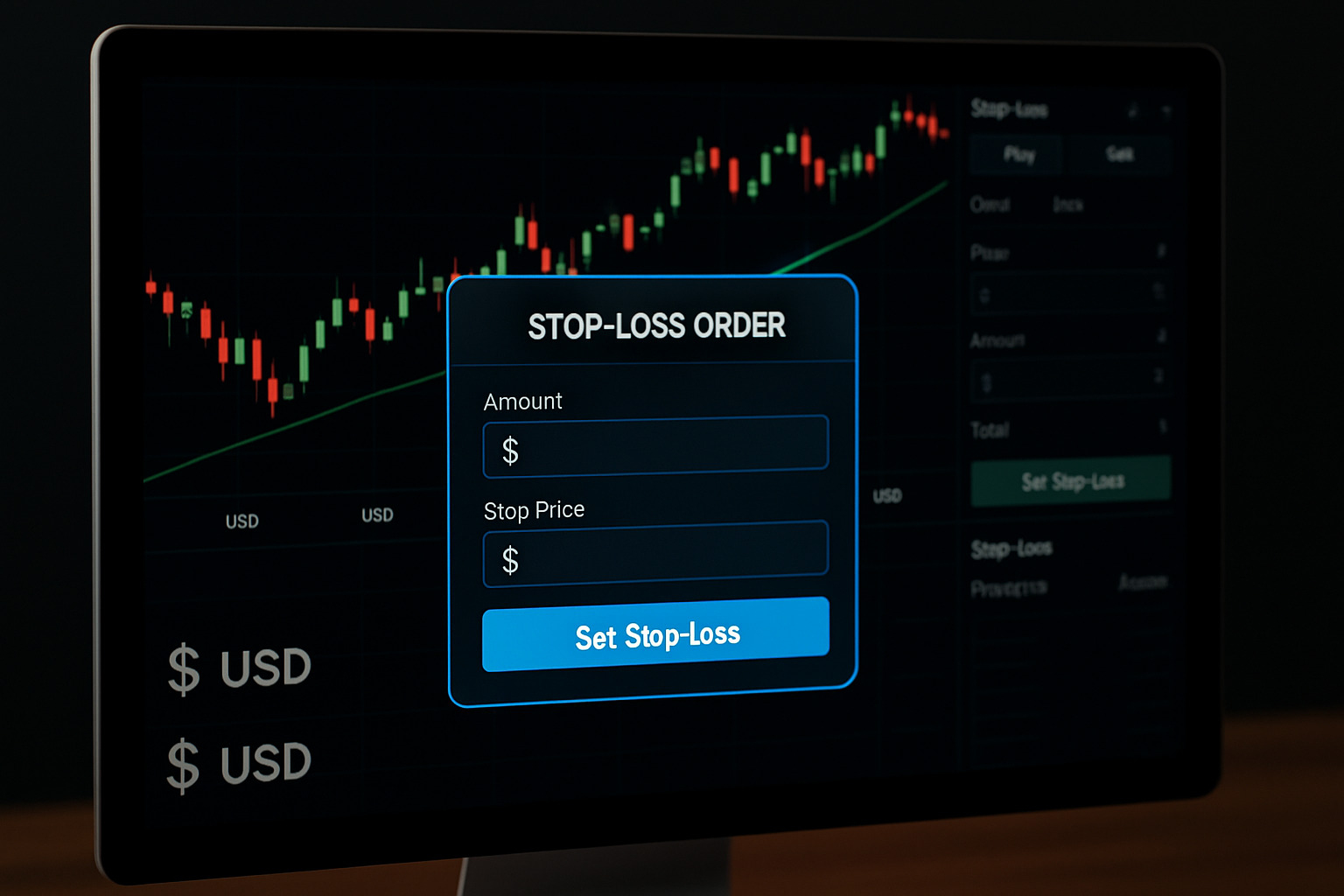
Risk management separates successful crypto day traders from those who blow up their accounts. The research shows that most day traders fail not because of poor entry strategies, but because of inadequate risk management.
The 1% rule forms the foundation of sound risk management: never risk more than 1% of your trading capital on a single trade. If you have a $10,000 account, your maximum loss per trade should be $100. This rule ensures that even a string of losses won’t devastate your account.
Position sizing becomes critical when following the 1% rule. If your stop-loss is 2% below your entry price, you can only risk 0.5% of your account on that trade to stay within the 1% total risk limit.
Building an Unbreakable Trading Plan
A written trading plan eliminates emotional decision-making during volatile market conditions. Your plan should specify:
- Entry criteria: Exact conditions that must be met before entering a trade
- Exit rules: Both profit targets and stop-loss levels
- Position sizing: How much to risk based on account size and setup quality
- Trading schedule: When you’ll actively trade and when you’ll stay away
- Daily loss limits: Maximum amount you’re willing to lose in a single day
The most successful traders treat their plan like a business manual. They review it regularly, track performance metrics, and refine strategies based on results.
Emotional Mastery & Discipline Hacks
Revenge trading – trying to quickly recover losses through bigger bets – destroys more trading accounts than any other single factor. When you hit your daily loss limit, stop trading immediately. Take a break, review what went wrong, and return tomorrow with a clear head.
Celebrating small wins helps maintain positive psychology during inevitable losing streaks. Professional traders often withdraw a portion of profits regularly to reinforce the reality that their strategy works.
Common discipline techniques include:
- Setting phone alarms for position reviews
- Using automatic orders to remove discretionary decisions
- Keeping a trading journal to identify patterns
- Taking breaks after three consecutive losses
- Practicing meditation or breathing exercises during stressful periods
For more insights on avoiding common pitfalls, read our guide on the biggest crypto mistakes beginners make.
Getting Started Safely: Step-by-Step for Beginners

Starting crypto day trading requires careful preparation and gradual skill development. The contrast between zero barriers to entry and the potential for extreme returns makes day trading both accessible and dangerous for beginners.
Setup Checklist Before Your First Live Trade
Exchange Selection: Choose reputable exchanges with strong security records, competitive fees, and good customer support. Popular options include Coinbase Pro, Binance, and Kraken. Compare their fee structures, as high-frequency trading can make small differences in fees significant over time.
Security Setup: Enable two-factor authentication, use strong unique passwords, and consider hardware wallets for storing funds not actively being traded. Never keep more than necessary on exchanges – they remain targets for hackers.
Paper Trading: Practice your strategies with virtual money for at least 3 months before risking real capital. Most exchanges offer demo accounts that simulate real trading conditions without financial risk.
Tool Stack: Set up charting software (TradingView is popular), price alerts, and portfolio tracking tools. Organize your workspace with multiple monitors if possible – crypto day trading requires monitoring several data streams simultaneously.
Legal Compliance: Understand your local regulations regarding cryptocurrency trading. Keep detailed records of all trades for tax purposes, as crypto trading is taxable in most jurisdictions.
Scaling Up Responsibly
Start with small position sizes even after paper trading success. Real money creates psychological pressure that demo accounts can’t replicate. Begin with 0.1% risk per trade instead of the full 1%, gradually increasing as you prove consistency.
Track key performance metrics:
- Win rate (percentage of profitable trades)
- Average win vs. average loss ratio
- Maximum drawdown periods
- Profit factor (gross profit divided by gross loss)
Consider periodic withdrawals of profits to compound your success while reducing account risk. Many successful traders withdraw 25-50% of monthly profits, reinvesting the remainder to grow their trading capital.
For broader investment strategies beyond day trading, explore our crypto investment tips.

Frequently Asked Questions about Crypto Day Trading
Can I Really Make a Living Day Trading Crypto?
While some traders report earning $1,000 per day, the reality is more sobering. Research indicates that only about 1.6% of all traders are consistently profitable over time. The high failure rate stems from inadequate risk management, emotional decision-making, and unrealistic profit expectations.
Making a living from crypto day trading requires:
- Substantial starting capital (minimum $25,000-$50,000)
- Consistent monthly returns of 10-15%
- Ability to withstand 30-50% drawdowns during learning phases
- Treating trading as a full-time profession with continuous education
Most successful full-time traders took 2-3 years to develop consistent profitability. They recommend building skills and track record with smaller amounts before attempting to trade for a living.
What Technical Indicators Work Best in Crypto’s 24/7 Market?
The most effective indicators for crypto day trading are RSI, MACD, moving averages, and volume analysis. These indicators work well because they adapt to crypto’s unique characteristics:
RSI remains reliable across all timeframes and market conditions. The standard 14-period setting works well, with overbought/oversold levels at 70/30.
MACD excels at identifying momentum shifts in volatile crypto markets. The standard 12, 26, 9 settings provide good signals across most timeframes.
Moving Averages help identify trend direction and dynamic support/resistance levels. The 200-period EMA provides excellent trend bias for day trading decisions.
Volume confirms price movements and helps identify fake breakouts. Look for volume at least 50% above average when entering momentum trades.
How Do Taxes and Regulations Affect Day Traders?
Crypto day trading creates complex tax obligations that vary by jurisdiction. In most countries, each trade is a taxable event, requiring detailed record-keeping of:
- Date and time of each trade
- Buy and sell prices
- Fees paid
- Profit or loss on each transaction
Professional tax software or accountants specializing in cryptocurrency can help manage compliance. Some traders face hundreds or thousands of taxable events annually, making proper record-keeping essential.
Regulations continue evolving rapidly. Stay informed about changes in your jurisdiction and consider consulting legal professionals for complex situations.
Conclusion & Next Steps
The best crypto day trading strategies combine proven technical analysis with disciplined risk management and emotional control. Success requires treating trading as a professional skill that takes years to master, not a get-rich-quick scheme.
Key takeaways for aspiring crypto day traders:
- Start with education – Master the fundamentals before risking real money
- Practice extensively – Use demo accounts to develop skills without financial risk
- Manage risk religiously – The 1% rule and proper position sizing are non-negotiable
- Stay disciplined – Emotional trading destroys more accounts than poor strategy
- Keep learning – Markets evolve, and successful traders adapt their approaches
Crypto day trading isn’t suitable for everyone. The high stress, time commitment, and financial risk make it challenging even for experienced traders. Consider whether your personality, lifestyle, and financial situation align with the demands of active trading.
At TheEntrepreneurs.net, we believe in providing actionable, up-to-date advice for business success. Whether you’re exploring crypto day trading as a side income or considering it as a full-time venture, approach it with the same professionalism you’d apply to any business endeavor.
The crypto market’s 24/7 nature means opportunities never stop emerging. However, the most successful traders know that not every opportunity is worth taking. Focus on high-probability setups that align with your tested strategies, and remember that sometimes the best trade is no trade at all.
For more insights on analyzing business and market trends that can inform your trading decisions, check out our business trend analysis guide.
The journey to becoming a successful crypto day trader is challenging but potentially rewarding for those who approach it with proper preparation, realistic expectations, and unwavering discipline.