
Why Every Minute Counts When You’re Building Your Dream
The best use of time when starting a business comes down to focusing on money-making activities first, validating your idea quickly, and avoiding the endless planning trap that kills most startups before they launch.
Quick Answer – Best Time Use Priorities for New Entrepreneurs:
- Revenue-generating tasks – Sales outreach, customer interviews, pricing tests
- MVP development – Build the minimum viable version to test demand
- Market validation – Test your idea with real customers before investing heavily
- Essential legal setup – Business registration, tax IDs, basic compliance
- Financial planning – Break-even analysis, runway calculations, funding strategy
- Time blocking – Dedicate specific hours to high-impact work only
Here’s the harsh truth: Americans spend almost four hours per day consuming media according to the Bureau of Labor Statistics. That’s time you can’t afford to waste when you’re racing against your savings account.
Most new entrepreneurs treat their time like it’s unlimited. They spend weeks perfecting business plans that never see real customers. They obsess over logos while their competitors are making first sales.
Your time is your scarcest resource – more precious than money, connections, or even great ideas. The difference between successful founders and those who burn out isn’t talent or luck. It’s knowing exactly where to spend their hours when every decision feels equally urgent.
Best use of time when starting a business glossary:
Why Time Is Your Scarcest Startup Asset
While you’re debating whether to start your business next month or next year, someone else with your exact same idea is already talking to customers.
The best use of time when starting a business isn’t just about productivity—it’s about understanding that every hour you delay is an hour your competition gets ahead. Your mental energy has an expiration date each day.
Think about opportunity cost. Right now, you could be researching your market, calling potential customers, or building your first prototype. Most founders waste their best hours on activities that feel productive but don’t actually move the needle.
Your brain operates on willpower cycles. You wake up with a full tank of mental energy, and every decision drains that tank. By 3 PM, when you finally sit down to work on that important business plan, you’re running on fumes.
The Bureau of Labor Statistics found Americans spend nearly 2.8 hours per day consuming media—almost as much time as they spend working. For entrepreneurs, this should be a massive wake-up call.
Decision fatigue hits entrepreneurs especially hard. By the time you’ve decided what to wear, what to eat, and answered your first dozen emails, your brain has made hundreds of micro-decisions. When you get to the big strategic choices, you’re mentally exhausted.
Scientific research on decision fatigue backs this up—your mental energy isn’t unlimited, and protecting it might be the most important business skill you never learned.
Hidden Time Sinks That Kill New Businesses
Social media scrolling is the biggest culprit. You tell yourself you’re doing “market research,” but thirty minutes later you’re watching cat videos. Your brain gets addicted to those dopamine loops while your business plan sits untouched.
Email ping-pong might feel urgent, but it’s rarely important. Every time you stop to answer an email, it takes about 23 minutes to fully refocus. That “quick” email check just cost you half an hour of deep work.
Context switching between different types of work fragments your attention. One minute you’re writing marketing copy, the next you’re reviewing finances. Your brain never gets a chance to settle into productive flow state.
The Morning Edge—Leverage Peak Willpower Hours
Your circadian rhythm gives you a built-in advantage. Your cortisol levels naturally peak in the morning, giving you energy and focus before your brain gets bombarded with decisions and distractions.
Scientific research on willpower proves that self-control follows predictable patterns. You start with maximum mental strength and gradually lose it until evening.
Smart entrepreneurs structure their days around this reality. They save their most challenging work for those peak willpower hours in the morning. Try the “power hour” approach: dedicate your very first hour exclusively to your highest-impact business task.
The Best Use of Time When Starting a Business
Here’s what separates successful entrepreneurs from those who burn out: they know exactly which activities generate revenue and which ones just feel productive.
After watching hundreds of startups launch (and fail), we’ve cracked the code on where your precious hours should actually go. The best use of time when starting a business isn’t perfecting pitch decks or networking. It’s the unglamorous work that directly connects you with paying customers.
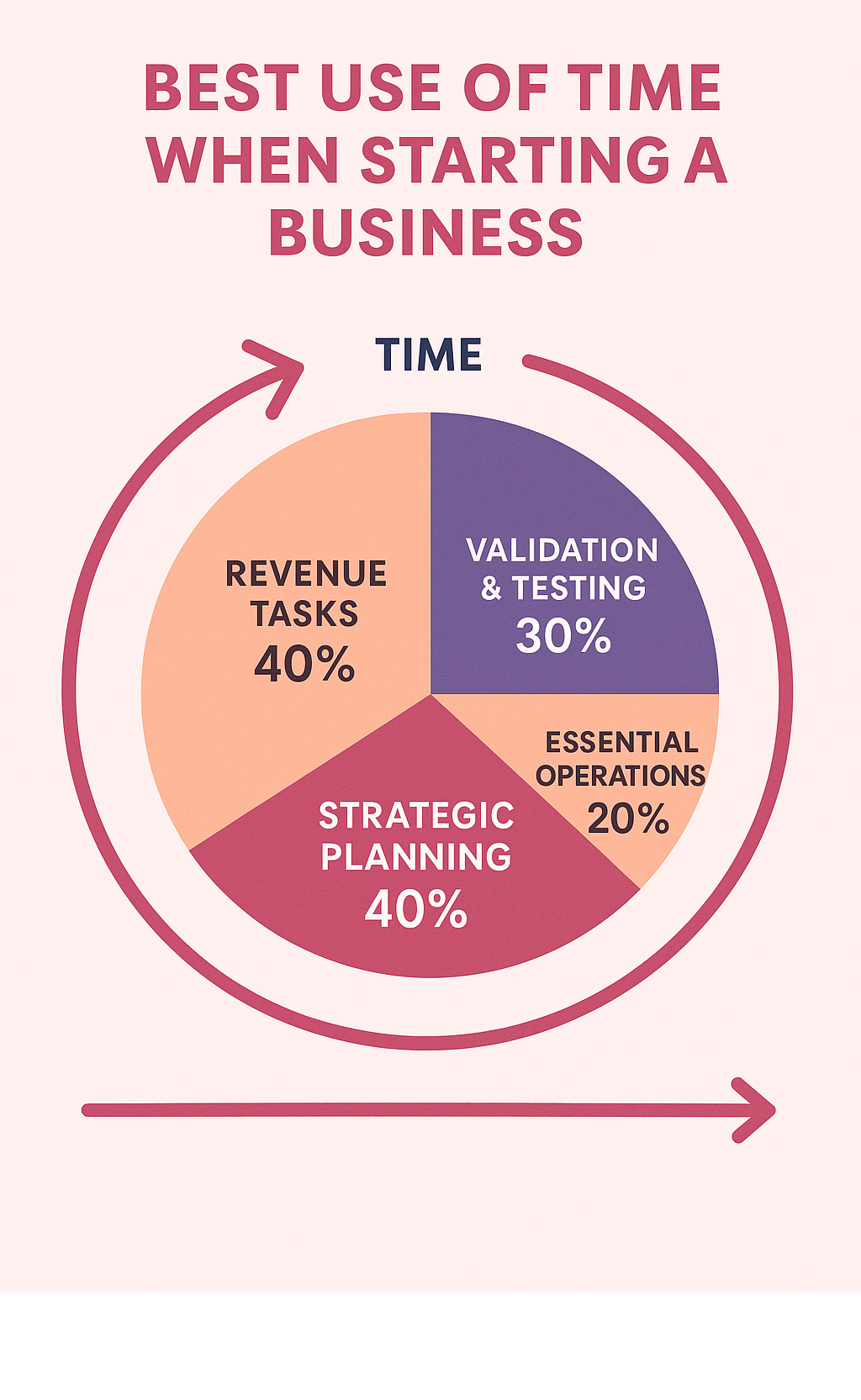
Money-making tasks should eat up 40% of your startup time. This means sales calls, customer interviews that reveal buying behavior, and pricing experiments. If an activity doesn’t put you face-to-face with someone who might pay you, it probably belongs elsewhere.
Market validation deserves 30% of your effort – but real validation, not the fake kind. Test your assumptions with actual customers who have real problems and real budgets. Build something simple, show it to people, and watch what they do (not what they say they’ll do).
Essential operations need about 20% of your time. Yes, you need to register your business and set up basic financial systems. But don’t over-engineer these early on. Get the minimum legal structure in place and move on to making money.
Strategic planning gets the leftover 10%. Your plan will change the moment you talk to your first real customer. Better to have a simple roadmap and adjust based on what you learn.
More info about Business Strategy can help you make strategic decisions without analysis paralysis.
80/20 Your To-Do List—Focusing on Revenue First
The Pareto Principle hits startups hard. About 80% of your results will come from 20% of your activities – but only if you’re ruthless about identifying that critical 20%.
For new businesses, revenue-generating activities almost always live in that vital 20%. Everything else might make you feel busy, but they’re usually expensive distractions.
Revenue Tasks vs. Vanity Tasks:
| Revenue Tasks (Do First) | Vanity Tasks (Do Later) |
|---|---|
| Customer interviews | Perfect logo design |
| Sales calls | Social media followers |
| Pricing tests | Industry awards |
| Product demos | Press coverage |
| Payment processing setup | Office space decoration |
Direct sales outreach feels scary, but it’s your fastest path to validation and cash flow. Every conversation teaches you something valuable about your market, messaging, or product.
Part-Time vs. Full-Time Launch—Choosing Your Clock
The decision between part-time and full-time launch depends on your financial runway, market opportunity, and risk tolerance. Both approaches work, but they demand different time management strategies.
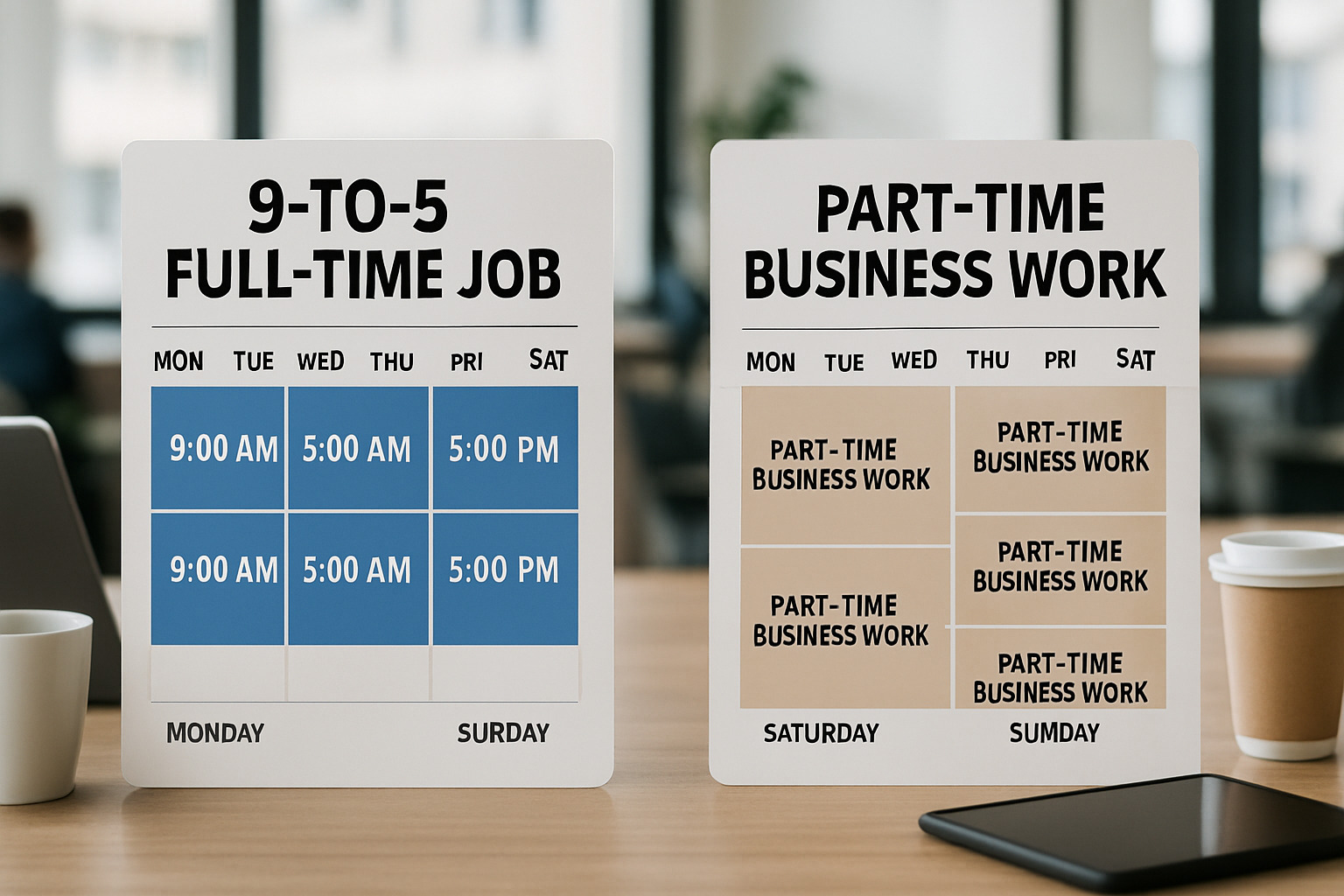
Part-time launch reduces financial risk but cranks up time pressure. You’re juggling a day job while building a business, which means every single hour counts even more.
Full-time launch provides laser focus but increases financial pressure. You can pour all your mental energy into the business, but you’re racing against your savings account.
The Best Use of Time When Starting a Business While Still Employed
Managing a startup while employed requires military-level time discipline. When you’re working with limited hours, every minute becomes precious real estate.
Time blocking becomes your secret weapon. Dedicate specific hours to specific business activities and guard those blocks like important client meetings.
Early-morning sprints leverage your peak willpower hours before your day job drains your mental battery. Many successful entrepreneurs built their businesses in the 5 AM to 7 AM window.
Outsourcing chores buys back weekend hours for business work. Hire cleaning services, use grocery delivery, or negotiate household task trades with family members.
The secret sauce is consistency over intensity. Working two focused hours every morning beats eight scattered hours on the weekend.
More info about Time Management Hacks provides specific strategies for maximizing limited time windows.
Tools & Tactics That Stretch Every Minute
The right tools can double your output, but the wrong ones will eat your day alive. The best use of time when starting a business means choosing systems that actually work, not just the ones that look impressive.
Most founders collect productivity apps like trading cards. They’ve got seventeen task managers, twelve note-taking apps, and a calendar system so complex it requires a manual. Meanwhile, their actual business sits neglected.
Time tracking apps like RescueTime or Toggl are eye-opening reality checks. We had one client who swore he was working twelve-hour days. The tracking data showed three hours of real work mixed with nine hours of “research” (translation: YouTube rabbit holes).
Kanban boards work because they’re visual and simple. Tools like Trello or Notion help you see your work moving from idea to in-progress to done. There’s something deeply satisfying about dragging a task into “completed” that keeps you motivated.
Automation handles the boring stuff. Email templates save you from retyping responses fifty times. Social media schedulers let you batch posts once a week. Payment processors handle invoicing automatically.
Virtual assistants have become incredibly affordable. For less than you’d spend on coffee each month, you can have someone handling your email inbox, scheduling appointments, and doing research.
More info about Business Process Automation Guide walks you through setting up these systems step by step.
Build Systems, Not Heroics
Every superhero entrepreneur eventually hits a wall. You can’t scale yourself indefinitely. Smart founders build systems early, even when the business is still tiny.
Standard operating procedures sound boring, but they’re your ticket to freedom. When you document how to handle customer complaints or process orders, you’re creating a playbook anyone can follow.
Start with tasks you do most often. If you find yourself explaining the same process repeatedly, write it down. Create simple, step-by-step guides with screenshots if needed.
Templates are time-saving gold mines. Build email templates for common customer questions, proposal templates for new clients, and social media post templates. You can customize them for specific situations, but having a starting point cuts work time in half.
Tech Stack for Clock-Smart Founders
Your technology choices can either be productivity multipliers or time-wasting distractions. The best tech stack prioritizes simplicity and integration over bells and whistles.
Calendar blocking tools like Calendly eliminate the email tennis match of scheduling meetings. They also protect your time by clearly showing availability and preventing people from booking you into oblivion.
Zapier automations are like having a digital assistant that never sleeps. You can automatically add new customers to your email list, create tasks when someone fills out a contact form, or update spreadsheets when sales occur.
Project dashboards give you a bird’s-eye view of everything happening in your business. Tools like Asana or Notion help you see what’s on track, what’s falling behind, and what needs immediate attention.
Start with the basics and add complexity only when it solves real problems you’re actually experiencing.
Avoiding Burnout & Maintaining Work-Life Balance
Here’s something most startup guides won’t tell you: the best use of time when starting a business includes time for rest. The entrepreneurial journey is a marathon, not a sprint, and founders who burn themselves out in year one never find if their brilliant ideas could have changed the world.
Mindful breaks aren’t Instagram wellness trends – they’re performance requirements for your brain. Think of these pauses like hitting the refresh button on your computer when it starts running slowly. Even five minutes of deep breathing can reset your mental state and prevent costly mistakes.
Your brain does its best work when it has time to wander. Many breakthrough business ideas happen in the shower, during workouts, or while doing dishes – moments when your conscious mind relaxes.
Exercise serves double duty for entrepreneurs. It keeps your body healthy, but more importantly, it clears mental cobwebs and often delivers your best strategic insights.
Sleep hygiene directly impacts every business decision you make. When you’re running on four hours of sleep, that “brilliant” marketing idea might actually be terrible. Well-rested entrepreneurs make better choices, period.
Weekly review sessions act like your business GPS, helping you step back from daily chaos to see if you’re heading in the right direction. Spend 30-60 minutes each week asking: What worked? What flopped? What needs to change?
Early Warning Signs You’re Overextended
Burnout sneaks up like a slow leak in your tire. Learning to spot these warning signs early can save you months of recovery time.
Decision errors multiply when your mental tank hits empty. If you find yourself making choices you immediately regret, or avoiding important decisions altogether, your cognitive resources are running on fumes.
Irritability with people you normally enjoy signals that your stress levels have crossed into the danger zone. When friendly customer questions feel like personal attacks, it’s time to pump the brakes.
Dropped commitments start small but snowball quickly. First you skip your morning workout “just this once.” Soon you’re breaking promises to customers and missing your own deadlines.
The trick is catching these warning signs early, when small adjustments can get you back on track. Waiting until you’re completely burned out can sideline you for months.
Frequently Asked Questions about the Best Use of Time When Starting a Business
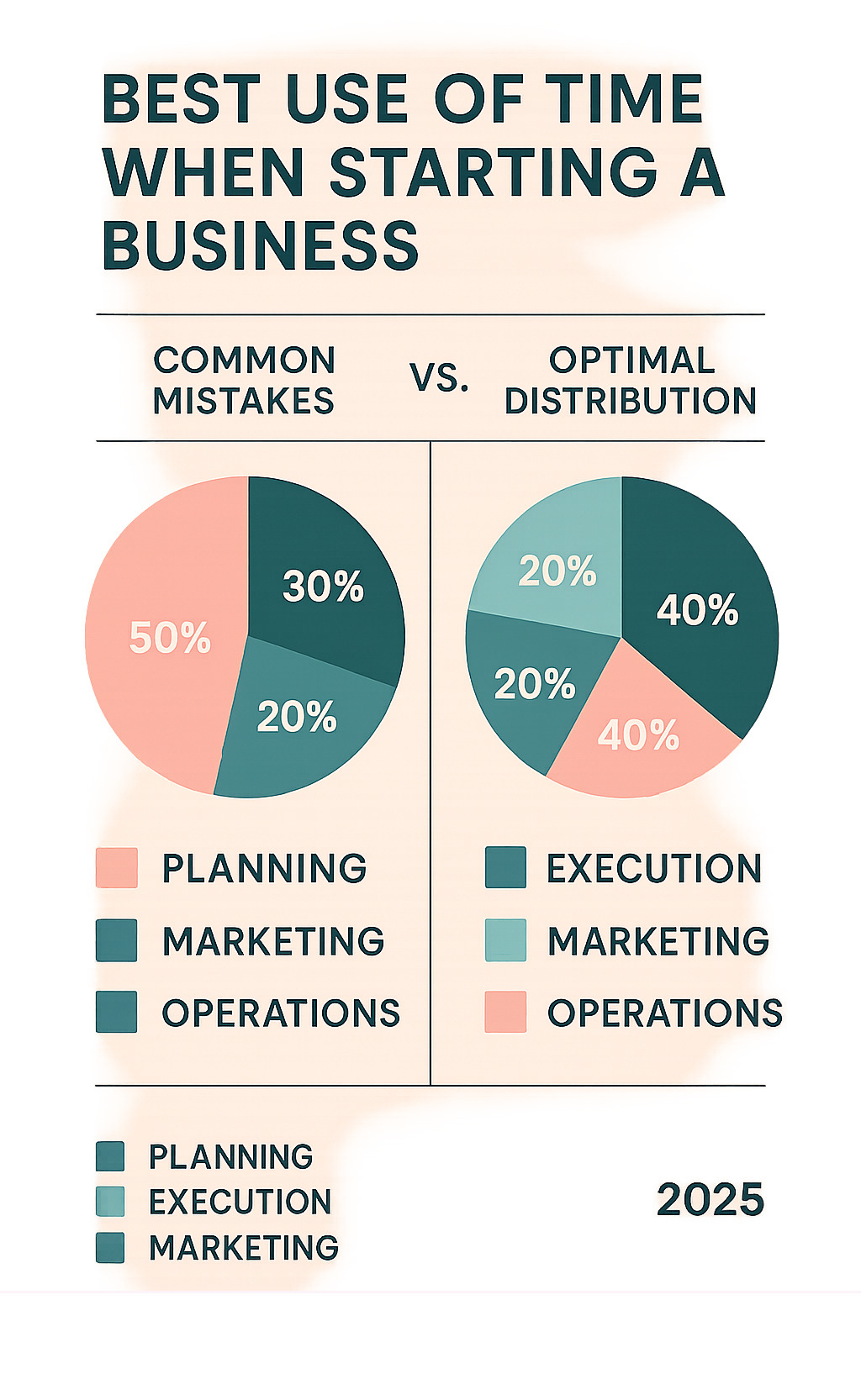
We get these questions almost daily from entrepreneurs who are drowning in advice but starving for clear direction. Most founders ask the wrong questions about time management. They want to know how much time to spend instead of which activities actually matter.
The best use of time when starting a business isn’t about working more hours – it’s about working on the right things at the right time.
What tasks should claim my very first 30 days?
Your first month determines whether you’re building a real business or an expensive hobby. Forget business plans and market research. Your first 30 days should feel uncomfortable because you’re talking to strangers about problems you think you can solve.
Week one belongs to customer findy. Have 10-15 conversations with people who might actually pay for your solution. Don’t pitch anything. Just listen. Ask about their biggest frustrations and how they currently solve the problem.
Week two is for building something testable. Create the simplest possible version of your solution that demonstrates your core concept. This might be a landing page, basic prototype, or detailed service description.
Week three tests your assumptions with real feedback. Show your MVP to the people you interviewed. Would they use this? Would they pay for it? What’s missing?
Week four focuses on making your first real sales attempts. Even if your product feels incomplete, some customers will pay for a solution to their urgent problems.
How many hours a week must I devote before quitting my job?
This question assumes that hours equal progress, which is the biggest lie in entrepreneurship. We’ve seen people work 60 hours a week on the wrong things and make zero progress.
The real question is: what milestones indicate you’re ready to make the leap? Most successful entrepreneurs recommend reaching $2,000-3,000 in monthly recurring revenue before quitting their day jobs.
Service businesses often require 10-15 hours per week to reach initial profitability. Product businesses might need 20-25 hours per week due to development time.
The magic happens through consistency over intensity. Working 10 focused hours every week beats 20 scattered hours every other week.
How do I know it’s time to move from planning to launch?
If you’ve been “planning” for more than a month without talking to potential customers, you’re procrastinating. Planning feels productive because it’s safe and controllable, but it doesn’t generate revenue.
You’re ready to launch when you can clearly articulate three things: who your customer is, what problem you’re solving, and how your solution addresses that problem better than alternatives.
Signs you’re ready: You can explain your business in one sentence. You know who your first 10 customers will be. You have something to show or demonstrate.
Signs you’re procrastinating: You’re researching competitors obsessively, adding features to your business plan, or waiting for the “perfect” time to start.
Launch when you’re 70% ready, not 100% ready. The remaining 30% can only be learned through real customer interactions.
Conclusion
Here’s what we’ve learned about the best use of time when starting a business: it’s not about cramming more hours into your day or pulling endless all-nighters. It’s about becoming ruthlessly smart with the hours you have.
Think of time like startup capital – because that’s exactly what it is. Every hour you spend scrolling social media or perfecting a logo is an hour not spent talking to customers or making sales. The entrepreneurs who succeed aren’t necessarily the ones who work the most hours. They’re the ones who work on the right things when their energy is highest.
Choose revenue-generating activities first – customer interviews, sales calls, and product testing. These conversations will teach you more about your business in a week than months of planning ever could.
Validate your assumptions quickly instead of falling into the planning trap that kills most startups. Your first business plan will be wrong anyway. Better to find that after two weeks of customer feedback than two months of detailed planning.
Build systems that multiply your effectiveness rather than trying to heroically handle everything yourself. The hour you spend creating an email template or setting up automation will save you dozens of hours over the coming months.
The minutes you invest in proper time management today compound like interest. Save 30 minutes per day through better systems, and you’ve just created 180 extra hours per year to grow your business. That’s a full month of additional productive time.
The discipline you develop now around protecting your peak energy hours and focusing on high-impact activities becomes the foundation for everything that follows. These habits will serve you whether you’re a solo entrepreneur or eventually leading a team of hundreds.
We’ve seen too many promising entrepreneurs burn out not from lack of talent or market opportunity, but from treating their time and energy carelessly. Don’t let that be your story.
At The Entrepreneurs, we believe every founder deserves to build something meaningful without sacrificing their health or relationships. The best use of time when starting a business isn’t about working yourself to exhaustion – it’s about working smart enough to create the freedom you started this journey to find.
More info about Startup Growth Strategies can help you continue optimizing your approach as your business evolves and grows.
The clock is ticking, but now you know exactly how to make every second count toward building the business of your dreams.