

Why Effective Time Management Is Your Business Superpower
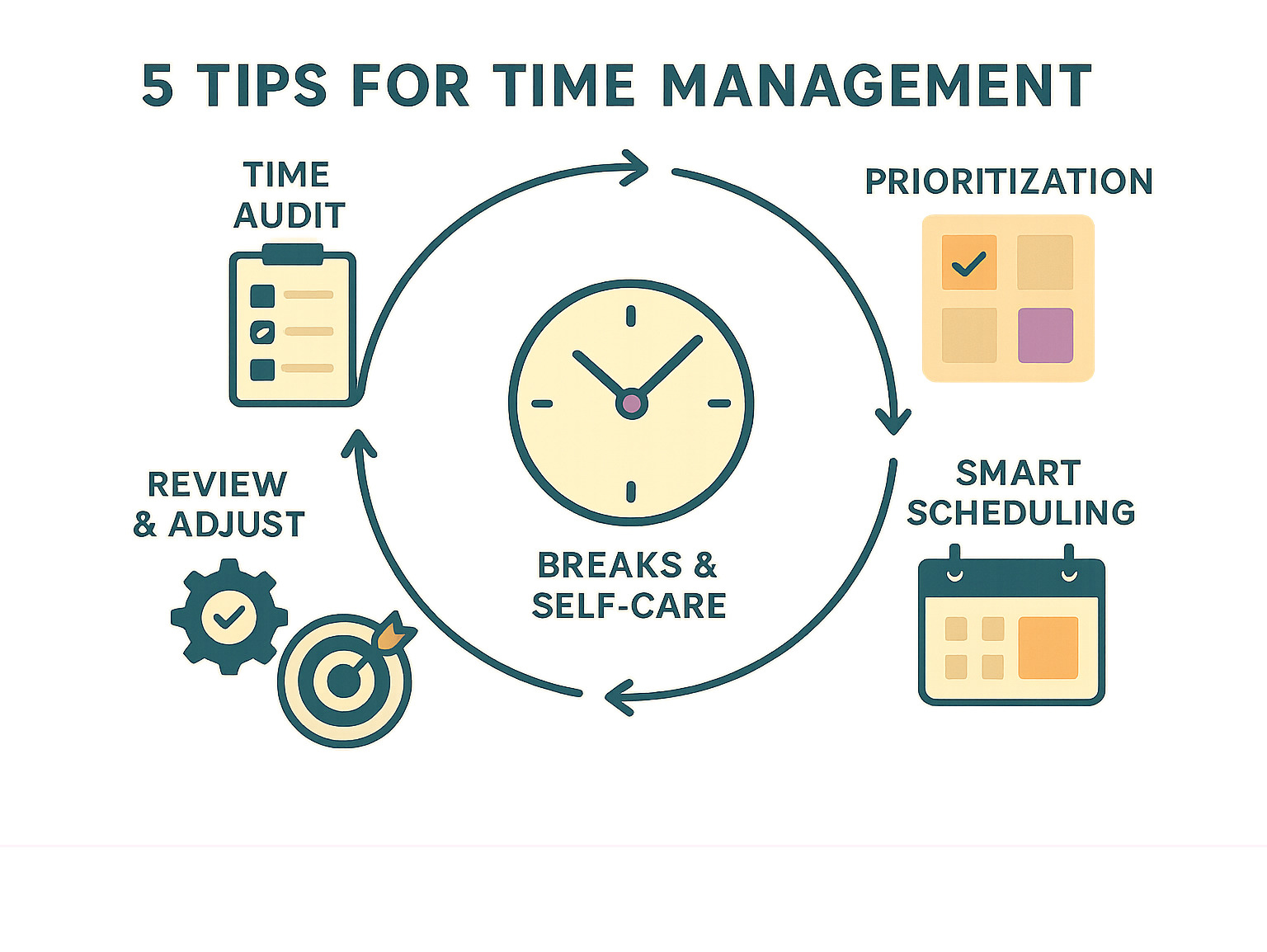
5 tips for time management can transform how you run your business and your life. Here’s what actually works:
1. Conduct a Time Audit & Use the Eisenhower Matrix – Track where your time goes and sort tasks by urgent vs. important
2. Build a Smart Schedule – Use calendars, time blocking, and timeboxing to protect your focus time
3. Eat That Frog – Tackle your biggest, most important tasks first when your energy is highest
4. Minimize Distractions – Turn off notifications, batch similar tasks, and try the Pomodoro Technique
5. Maintain Balance – Schedule breaks, practice self-care, and review your system weekly
As an entrepreneur, you’re probably familiar with that overwhelming feeling of having way too much to do and not nearly enough time. You’re not alone.
The numbers tell the story: 89% of workers admit to wasting time every day at work, while 71% of knowledge workers experienced burnout at least once in 2020. Even worse, 80% of us work with our inbox or communication apps constantly open, destroying our focus and missing deadlines.
But here’s the thing – time management isn’t really about managing time at all. You can’t control time, but you can control what you do with it.
The most successful entrepreneurs don’t have more hours in their day. They just use those hours more intentionally. They know that good time management creates a calm, anxiety-reducing workflow that promotes deep thinking and smooth productivity.
Research shows it takes about 66 days to form a solid time management habit. That might seem like a long time, but think of it as an investment. Once these systems become automatic, you’ll wonder how you ever worked without them.
Why Time Management Matters for Students & Professionals
Let’s be honest – time management is one of those phrases that makes everyone’s eyes glaze over. It sounds like corporate jargon, right? But here’s what it really means: intentionally choosing how you spend your precious hours instead of letting them slip away while you’re drowning in busywork.
Think of time management as your secret weapon for getting the important stuff done while actually having energy left over for the things you love. It’s not about cramming more tasks into your day – it’s about making space for both productivity and peace of mind.
The research tells a sobering story. A whopping 89% of workers admit to wasting time every single day. But here’s the kicker: 71% of knowledge workers experienced burnout in recent years. When we don’t manage our time well, our bodies respond with stress hormones like adrenaline and cortisol.
The magic happens when you start distinguishing between urgent and important tasks. Scientific research on time management shows that people who use frameworks like the urgency-importance matrix don’t just get more done – they actually feel better about their work.
Here’s what really matters: building these skills takes time. Research suggests it takes about 66 days to turn a new habit into something automatic. The 5 tips for time management we’re about to dive into aren’t just productivity hacks – they’re your roadmap to working smarter, not harder.
5 Tips for Time Management
Ready to transform how you work? These 5 tips for time management aren’t just theory – they’re battle-tested strategies that successful entrepreneurs use every day to get more done while feeling less stressed.
The secret sauce? Building momentum gradually. Don’t try to overhaul your entire life overnight. Pick one tip, practice it for a few weeks until it feels natural, then layer on the next one.
Tip 1: Conduct a Time Audit & Prioritize with the Eisenhower Matrix
Here’s an uncomfortable truth: most of us have no clue where our time actually goes. We think we know, but we’re usually wrong.
Start with a simple time log. For one full week, track everything you do in 15-minute chunks. Use whatever works: a notebook, your phone, a spreadsheet, or apps like Harvest or TrackingTime.
Once you have your week of data, it’s time for the magic: the Eisenhower Matrix. This simple grid helped a U.S. President manage his incredibly demanding schedule.
| Urgent | Not Urgent | |
|---|---|---|
| Important | Do First (Crises, deadlines, emergencies) | Schedule (Planning, prevention, development) |
| Not Important | Delegate (Interruptions, some emails, some calls) | Delete (Time wasters, excessive social media, busy work) |
Here’s where most people go wrong: they confuse urgent with important. Urgent screams for attention right now. Important moves you toward your bigger goals. The magic happens when you focus more on important tasks before they become urgent.
Scientific research on multitasking confirms what you probably already feel: trying to juggle everything at once makes you less effective, not more. The Eisenhower Matrix forces you to focus on one thing at a time.
Tip 2: Build a Smart Schedule – Calendars, Time Blocking, and Timeboxing
First, pick your calendar system and stick with it. Google Calendar, Apple Calendar, Outlook – they all work fine. The key is consistency.
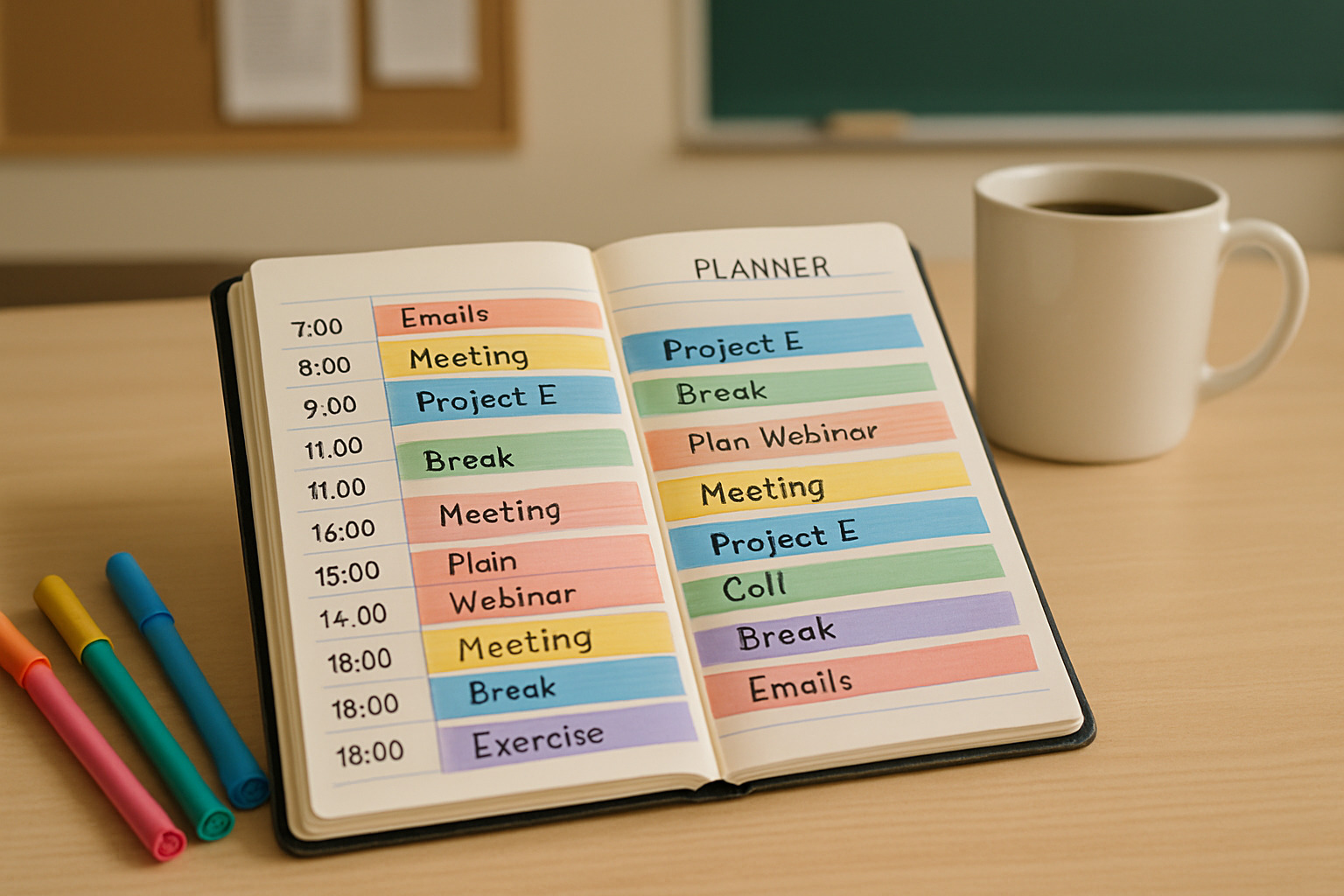
Time blocking is your new best friend. Instead of keeping endless to-do lists that never get done, assign specific time slots to your important tasks. Picture this: 9:00-10:30 AM for deep work on that big project, 10:30-11:00 AM for processing emails, 11:00-12:00 PM for client calls.
Timeboxing takes this even further. Set strict limits and stick to them. If you block one hour for email, stop when that hour is up, even if there are messages left.
Always build in buffer time. We humans are terrible at estimating how long things take – it’s called the planning fallacy. Add 25% extra time to your estimates.
Protect your deep work time like it’s made of gold. Research shows it takes about 23 minutes to fully refocus after an interruption. Block out 90-120 minute chunks for your most important work, and treat these blocks as non-negotiable appointments with yourself.
For more detailed strategies on building systems that support your business growth, check out our guide on Small Business Productivity Tools.
Tip 3: Eat That Frog – Tackle High-Impact Tasks First
Mark Twain had it right: “If it’s your job to eat a frog, it’s best to do it first thing in the morning. And if it’s your job to eat two frogs, it’s best to eat the biggest one first.”
Your “frog” is that important task you’ve been avoiding – the one that would make a real difference in your business if you actually did it.
Every evening, identify your Most Important Tasks (MITs) for tomorrow. Choose 1-3 tasks that, if completed, would make the next day a genuine success.
Think 80/20 when choosing your frogs. The Pareto Principle tells us that roughly 80% of our results come from 20% of our efforts. Your morning frogs should come from that powerful 20%.
Work with your natural energy, not against it. Most people experience their cognitive peak in the first few hours after waking.
Combat psychological resistance by breaking large frogs into smaller, less intimidating pieces. Instead of “write marketing strategy,” try “outline three key marketing goals.”
Tip 4: Minimize Distractions – Focus Modes, Batching, and Pomodoro
Here’s a statistic that might make you wince: 80% of knowledge workers keep their inbox or communication apps open all day. That’s like trying to have a deep conversation at a rock concert.
The Pomodoro Technique is your focus lifeline. Work in concentrated 25-minute bursts followed by 5-minute breaks. After four “pomodoros,” take a longer 15-30 minute break.
Master the art of batching similar tasks. Instead of checking email every few minutes throughout the day, batch all your email processing into 2-3 specific time slots.
Use your device’s focus modes strategically. Turn off non-essential notifications during your deep work blocks. Set up different profiles: one for deep focus (almost everything off), another for meetings (calls and calendar alerts only).
Scientific research on task switching confirms what many entrepreneurs suspect: multitasking is largely a myth. What we call multitasking is actually rapid task switching, and it comes with real costs.
Tip 5: Maintain Balance – Breaks, Self-Care, and Regular Reviews
Even the most brilliant system will crash and burn if it doesn’t account for the fact that you’re human. You need rest, connection, variety, and the occasional mental break to stay productive long-term.
Work with your natural energy cycles, not against them. Your body naturally goes through periods of high and low energy roughly every 90-120 minutes. Schedule your most demanding work during natural energy peaks and use the valleys for routine tasks.
Treat breaks like important appointments. Research consistently shows that regular breaks actually improve productivity and creativity. Try the 52-17 rule: focus for 52 minutes, then take a 17-minute break.
Schedule a weekly review like it’s a meeting with your future self. Every Friday afternoon, spend 15-30 minutes looking back at your week. What worked well with your time management? What felt like a struggle?
Build buffer time into everything. Life is beautifully unpredictable. Build slack into your schedule so one delayed task doesn’t create a domino effect.
Remember the 66-day rule for habit formation. Be patient with yourself as you implement these systems. Expect setbacks – they’re learning opportunities that help you refine your approach.
For more advanced strategies on maintaining work-life balance while growing your business, explore our comprehensive guide on Time Management Tips for Entrepreneurs.
Leveraging Technology & Analog Tools Wisely
Here’s the truth about productivity tools: they can either boost your 5 tips for time management or become expensive distractions. The secret isn’t finding the perfect app – it’s building a simple system that actually works for how you think and work.
Start with your digital foundation. You absolutely need a reliable calendar system. Whether that’s Google Calendar, Outlook, or Apple Calendar doesn’t matter as much as picking one and sticking with it. Tools like Calendly can eliminate the back-and-forth email dance of scheduling meetings.
Task management doesn’t have to be complicated. Platforms like Asana, Trello, and Notion can transform how you organize projects. But remember – the best system is the one you’ll actually use every single day.
Capture your thoughts before they disappear. Your brain is terrible at remembering random ideas. That’s where tools like Evernote or simple Apple Notes become invaluable.

Don’t underestimate the power of paper. Despite living in a digital world, many successful entrepreneurs still swear by Papier planners or simple notebooks. Consider a hybrid approach: digital tools for scheduling and team collaboration, analog tools for daily planning and reflection.
Automation is where the real magic happens. Research shows that employees who automate routine tasks are 71% more likely to exceed their managers’ expectations. Look for opportunities to automate email templates, social media scheduling, and appointment scheduling.
Your digital workspace needs spring cleaning too. Scientific research on clutter shows that physical clutter hurts both your well-being and your ability to think clearly. The same applies to digital clutter.
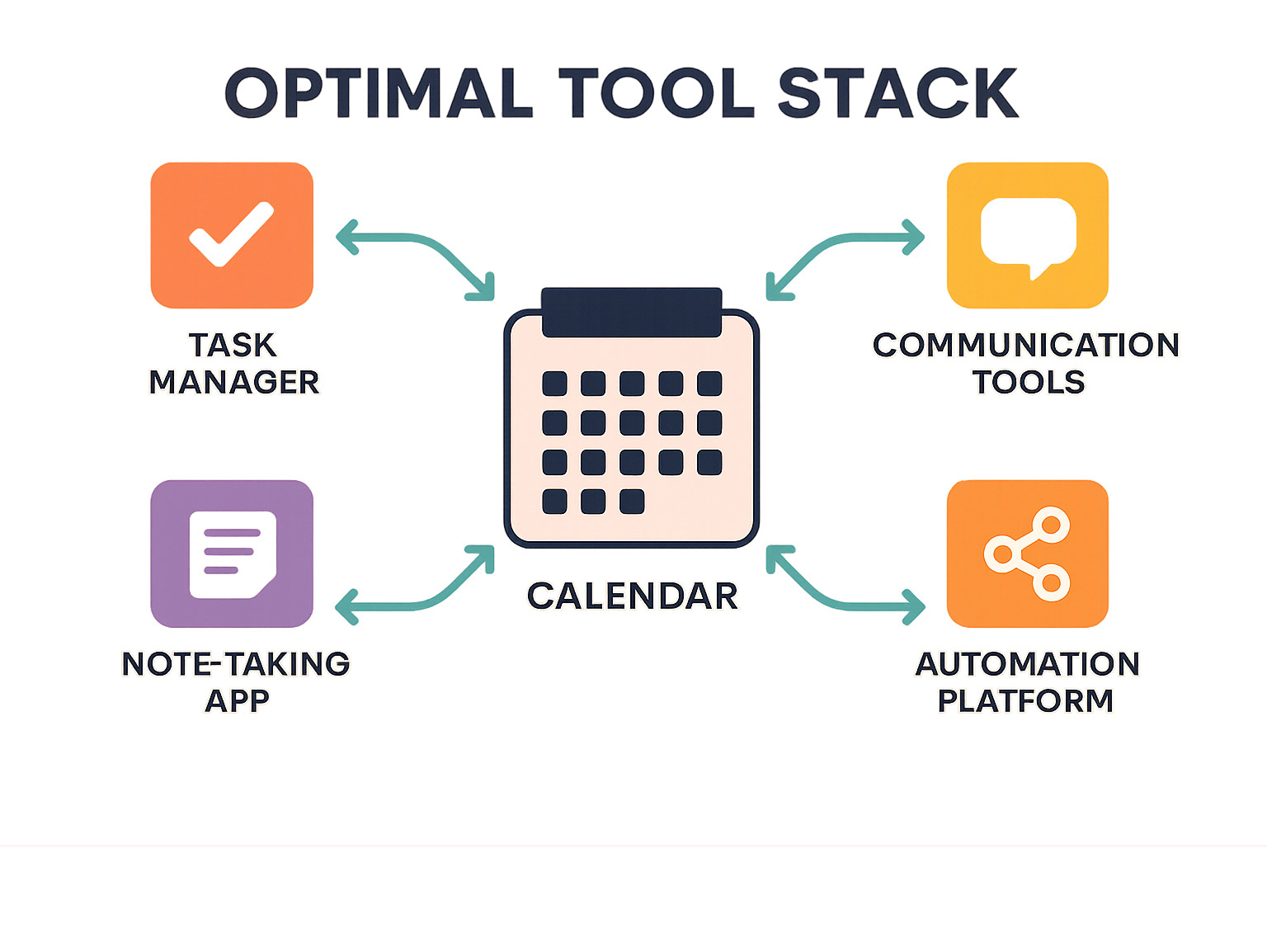
The integration principle changes everything. Your tools should work together like a well-oiled machine, not fight each other for your attention. The goal isn’t to have the most tools – it’s to create a simple, reliable system that supports your work without getting in the way.
Overcoming Common Challenges & Setting Boundaries
Even with our 5 tips for time management working smoothly, you’re still going to hit roadblocks. The difference between entrepreneurs who thrive and those who burn out isn’t avoiding challenges altogether – it’s knowing how to steer them.
Procrastination is often a symptom, not the disease. When you find yourself scrolling social media instead of tackling that important project, dig deeper. Are you avoiding the task because the next step isn’t clear? Because you’re afraid it won’t be perfect?
The fix is usually simpler than you think. Instead of “work on marketing strategy” sitting on your to-do list, break it down. Try “research three competitor websites” or “draft outline for marketing plan.”
The planning fallacy will humble you every time. We’re all guilty of thinking this project will somehow take less time than similar projects in the past.
Start tracking how long tasks really take. Keep a simple log for a few weeks. Once you have real data, add 25-50% buffer time to your estimates. It feels like you’re being pessimistic, but you’re actually being realistic.
Delegation feels impossible until you realize the math. If your time is worth $100 per hour and you spend two hours on bookkeeping that someone else could do for $30 per hour, you’ve just lost $140 in opportunity cost.
Learning to say no might be the hardest skill you’ll ever master. Every entrepreneur struggles with this because opportunities feel scarce. But here’s the truth: every yes to one thing is a no to something else.
ADHD and attention challenges require a different playbook. If your brain works differently, work with your natural patterns. Use timers extensively, break everything into smaller chunks, and create external accountability.
Digital well-being isn’t optional anymore – it’s survival. Set firm boundaries around email checking times, social media usage, and after-hours work communication. Your phone’s “Do Not Disturb” mode isn’t just for sleeping – it’s for protecting your most productive hours.
For more specific strategies on managing these challenges, check out our comprehensive guide on Time Management Hacks.
Frequently Asked Questions about Time Management
Let’s tackle the questions we hear most often about implementing these 5 tips for time management.
What are the biggest time-wasters and how do I avoid them?
The sneakiest time-wasters are the ones that feel productive but don’t actually move your business forward.
Social media and endless web browsing top the list. The solution isn’t willpower – it’s systems. Use your phone’s built-in app timers to limit usage, and designate specific times for social media instead of checking randomly throughout the day.
Email addiction might be even worse. The average person checks email every six minutes, which destroys any chance of deep focus. Instead of living in your inbox, batch your email processing into 2-3 specific time slots daily.
Meetings that could have been emails waste enormous time. Before scheduling or accepting any meeting, ask: “Could this be handled with a quick message or phone call?”
Perfectionism disguised as high standards wastes enormous amounts of time on low-impact details. Remember the Pareto Principle – often 80% of the value comes from just 20% of the effort.
How often should I review my schedule and goals?
Every morning, spend 5-10 minutes reviewing your schedule and priorities. At the end of each day, do a quick review of what you accomplished.
Weekly reviews are where the magic happens. Every Friday or Sunday, take 15-30 minutes to look at the bigger picture. What worked well this week? What didn’t?
Monthly check-ins help you zoom out even further. Are your daily activities actually aligned with your monthly objectives?
Remember the 66-day rule for habit formation – it takes about two months of consistent practice for these behaviors to become automatic.
Can apps really improve my time management?
Automation tools can genuinely save you significant time on routine tasks. Research shows that employees who automate repetitive work are 71% more likely to exceed their managers’ expectations.
Time-tracking apps provide data and insights that can be eye-opening. Seeing concrete evidence that you spend two hours daily on email might be the motivation you need to finally implement batching.
But here’s the trap: don’t become an app collector. The best time management system is the one you’ll use consistently, whether it’s a sophisticated app suite or a simple paper notebook.
For more detailed strategies on overcoming time management challenges, explore our guide on Time Management Hacks.
Conclusion
You’ve just learned the 5 tips for time management that can genuinely transform how you work and live. These aren’t just productivity hacks you’ll try for a week and forget – they’re foundational strategies that successful entrepreneurs rely on every single day.
Think back to where we started. Overwhelming feeling of having too much to do and not enough time? The good news is that feeling doesn’t have to be your reality. Time auditing with the Eisenhower Matrix helps you see where your time actually goes and focus on what truly moves the needle. Smart scheduling through time blocking and timeboxing protects your most important work from the chaos of daily distractions.
When you eat your frogs first, you tackle high-impact tasks while your energy is at its peak, rather than letting them loom over you all day. Minimizing distractions through techniques like the Pomodoro method and task batching gives you back the deep focus that creates real results. And maintaining balance with regular breaks and weekly reviews ensures your system stays sustainable for the long haul.
Here’s what we’ve learned from working with hundreds of entrepreneurs: the magic isn’t in finding more time. It’s in being intentional with the time you already have. It’s about creating systems that work with your natural rhythms instead of against them.
Don’t feel like you need to master everything overnight. Start with whichever tip resonated most strongly with you. Maybe it’s conducting that eye-opening time audit, or perhaps it’s finally implementing those morning frog-eating sessions. Give yourself those crucial 66 days to let the habit take root before adding the next piece.
The entrepreneurs who thrive long-term understand something important: productivity without sustainability is just a recipe for burnout. That’s why balance isn’t optional – it’s what keeps your time management system working year after year.
Your future self will thank you for the systems you build today. Every hour you invest in mastering these techniques pays dividends in reduced stress, increased focus, and the satisfaction of making real progress on what matters most to your business.
Ready to take your productivity to the next level? Our team at TheEntrepreneurs.net has compiled even more strategies in our detailed guide on time management hacks. Because when it comes to building a successful business, every minute counts – and now you know exactly how to make each one work for you.












[…] 5 tips for time management […]